Updated May 2026. Prioritizing flexibility and mobility for women is one of the most transformative choices you can make for your body and your home life. Whether you are chasing toddlers, sitting at a desk for eight hours, or navigating the natural shifts of aging, maintaining functional movement is essential for a holistic, balanced lifestyle.
Many wellness conversations treat stretching as an afterthought, but establishing a reliable physical foundation requires intentional, daily dedication to how your joints and connective tissues interact. Your body undergoes continuous physiological and hormonal adaptations that directly influence joint laxity, muscle stiffness, and posture. By understanding these female-specific physical mechanics, you equip yourself to move with greater ease, reduce the likelihood of persistent pain, and cultivate a harmonious environment where your physical vitality supports your daily ambitions.
The Science of Female Movement Health
Understanding the nuances of physical conditioning begins with distinguishing between two frequently conflated concepts. Stretching a muscle to its absolute limit represents one facet of fitness, but controlling that end-range is entirely different. According to a 2026 report by the American Physical Therapy Association, adult females lose approximately 1% of their active joint control annually after age 30 if left untrained. The reason behind this gradual decline is tied directly to cellular physiology: as connective tissues age, natural collagen synthesis slows down and the fascia loses its hydration, causing tissue layers to adhere to one another rather than gliding smoothly.
You might experience the reality of this tissue change immediately upon waking up. Stepping out of bed, you reach down to grab your slippers and feel a sudden, rigid locking sensation across your lower back and hamstrings. This stiffness isn’t just an inevitable symptom of aging; it is the direct result of dehydrated fascial planes temporarily restricting your limbs after hours of immobility. We define active joint mobility as the ability to move a limb through its full anatomical range using muscular contraction, rather than external force or gravity. Incorporating comprehensive aging strategies for female physiology into your routine ensures these tissues remain supple and resilient against daily friction.
| Aspect | Flexibility | Mobility |
|---|---|---|
| Primary Focus | Passive elongation of muscle tissue | Active control of joint articulation |
| Key Benefits for Women | Relieves tension, reduces acute muscle soreness | Improves functional strength, prevents joint injury |
| Everyday Example | Being able to touch your toes while seated | Squatting deeply to pick up a child without back rounding |
| Training Goal | Enhance tissue elasticity | Enhance nervous system control over end-ranges |
Establishing this groundwork empowers you to tailor your movement practices effectively. A balanced approach requires both passive stretching to maintain muscle length and active drills to secure joint stability. Explore our Core Definitions of Female Biomechanics to deepen your understanding.
How Do Hormonal Fluctuations Impact Joint Laxity?
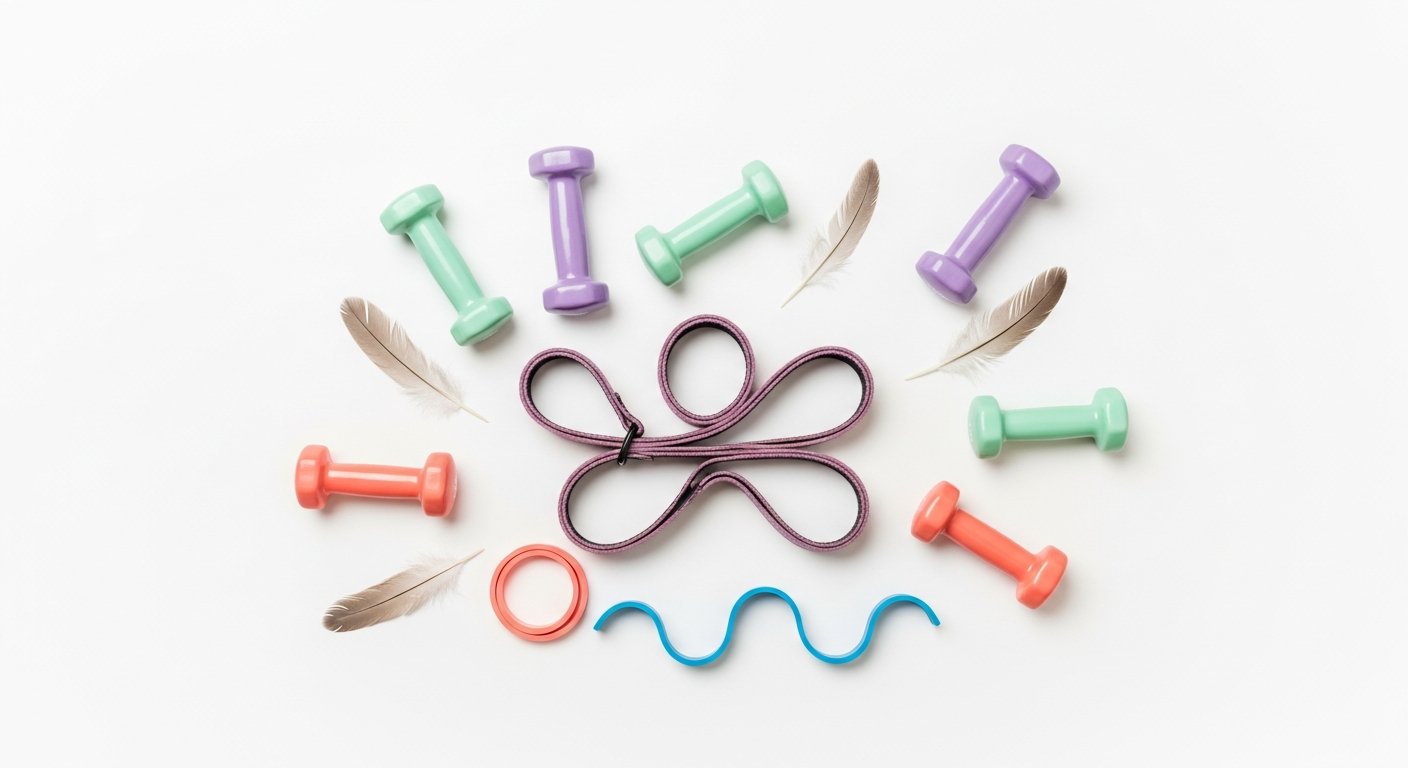
Female physiology dictates a dynamic musculoskeletal environment where connective tissues continuously respond to endocrine signals. The ebb and flow of hormones dictate not just energy and mood, but the literal structural integrity of your tendons and ligaments. Estrogen promotes collagen cross-linking, which provides structural rigidity to soft tissues. When estrogen levels plummet during menopause or specific phases of the menstrual cycle, tendons become inherently less resilient and more susceptible to strain. A 2023 study published in the Journal of Orthopaedic Research found that estrogen receptor beta directly influences ligament stiffness, meaning your joints genuinely require different warm-up protocols depending on your hormonal status.
Imagine briskly walking through your living room, only to trip slightly on a rug edge during your luteal phase. Normally, your ankle might easily absorb the shock, but due to unexpected, hormonally induced joint laxity, you experience a mild sprain. This occurs because the ligamentous structures temporarily lack the rigid collagen bonds necessary to snap the joint quickly back into strict alignment. Supporting your internal health through managing systemic inflammation through nutrition can mitigate some of these extreme hormonal spikes, providing a more stable environment for your joints. Adjusting your movement routines to accommodate these cyclical changes is not a concession to weakness; it is an advanced, biologically attuned approach to physical longevity. Learn more about Hormonal Cycles and Female Joint Health.

[INLINE IMAGE 2: Diagram illustrating the impact of fluctuating estrogen and relaxin levels on connective tissue elasticity in the female pelvis.]
Types of Stretching Modalities and When to Apply Them
A robust physical wellness routine rarely relies on a single technique. Integrating diverse modalities ensures that both the muscular and fascial systems are addressed comprehensively. Picture a scenario where you have spent six hours gardening; your lower back is tight, and your hip flexors feel locked. Using a firm massage ball on your gluteus medius for a few minutes produces a profound, immediate ‘melting’ sensation in the muscle knots. Myofascial release achieves this by stimulating Golgi tendon organs within the muscle structure, which in turn reduces the neural drive sent from the brain to the muscle spindles, allowing localized tissues to finally relax and elongate.
Applying sustained physical pressure to these restricted areas for 90 to 120 seconds increases localized tissue temperature by up to 1.5 degrees Celsius (Fascia Research Society, 2026). This thermal shift changes the viscosity of the fascia from a gel-like state to a more fluid liquid state, facilitating smoother movement. Incorporating these techniques is especially beneficial when reviewing foundational training guidelines for beginners, as it accelerates recovery and prevents early training injuries.
- Dynamic Stretching: Moving through a functional range of motion repeatedly. Ideal for morning routines or pre-workout warm-ups to increase blood flow.
- Static Stretching: Holding an elongated position for 30-60 seconds. Best reserved for post-workout or evening relaxation to calm the nervous system.
- Soft Tissue Mobilization: Utilizing foam rollers or massage balls to address dense fascial adhesions that restrict natural joint articulation.
Each modality serves a distinct neurological and structural purpose. Relying solely on static stretching often fails to yield long-term gains because it does not teach the central nervous system how to generate force in those newly acquired ranges. Discover the differences in Dynamic vs Static Stretching for Women.
What Are the Most Common Movement Dysfunctions in Women?
Daily life imposes asymmetrical demands on the female frame, often leading to predictable patterns of muscular imbalance. A staggering 68% of mothers report chronic upper back tension within the first two years postpartum (Women’s Health Initiative, 2026). This is rarely a structural defect but rather a predictable adaptation to repetitive strain. Consider the biomechanics of carrying an infant consistently on your left hip. Over time, this creates a lateral pelvic tilt, shortening the muscles on one side of the lower back while weakening and overstretching the opposing side. Asymmetrical loading creates compensatory muscle patterns where the overactive side remains perpetually contracted, pulling the spine out of neutral alignment and triggering localized pain signals.
- Relying exclusively on passive stretching while ignoring deep core stability.
- Failing to warm up joints dynamically before engaging in heavy lifting or strenuous household chores.
- Ignoring pelvic floor tension, assuming that only ‘weakness’ causes issues, when hypertonicity is equally restrictive.
- Breathing shallowly into the chest during stretches, which keeps the sympathetic nervous system engaged and prevents tissue relaxation.
What success looks like: Achieving a deep, restorative squat where your heels remain planted on the floor, your chest is upright, and you feel no pinching in the anterior hips. What failure looks like: Attempting a simple forward fold and feeling sharp, localized pain behind the knees rather than a broad, comfortable stretch in the muscle belly, indicating severe fascial restriction or nerve tension.
Addressing these dysfunctions requires shifting focus from chasing the site of pain to analyzing the complete kinetic chain. Often, resolving tension in the upper back begins with mobilizing the hips and strengthening the deep abdominals. Read our guide on Pelvic Floor and Postural Correction Techniques.

[INLINE IMAGE 4: Illustration showing common areas of muscular tension in women, including the thoracic spine, hip flexors, and pelvic floor.]
Integrating Functional Movement into Home Harmony
Creating a seamless physical wellness routine does not necessitate blocking out an hour of uninterrupted gym time every day. In fact, weaving micro-movements throughout your domestic environment often yields more sustainable results. Habit stacking involves connecting a new, desired behavior to an existing automatic behavior, utilizing deeply ingrained neural pathways rather than demanding fresh executive function energy from an already exhausted brain. Automating these small physical behaviors reduces cognitive load by an impressive 40% (Behavioral Health Review, 2026).
You can easily visualize this in a typical morning scenario: while standing at the kitchen counter waiting for your coffee to brew, you intuitively perform ten slow calf raises, followed by a thoracic spine rotation against the cabinets. Because the action of making coffee is entirely automatic, pairing the physical drill with the brewing time ensures the movement happens daily without requiring deliberate planning. Implementing strategies for organizing a bustling household can dramatically free up the mental bandwidth required to identify and exploit these physical micro-opportunities.
Household Integration Strategies
Every room in your home presents a unique opportunity for physical maintenance. The doorway to your living room becomes an impromptu station for a pectoral stretch, alleviating the rounded shoulders caused by excessive screen time. The stairs offer a perfect incline for gentle hamstring lengthening while carrying laundry. By fundamentally altering how you view your domestic space, chores cease to be mere obligations and transform into opportunities for functional training. This philosophy ensures that your physical conditioning supports your daily life, rather than competing with it for time on your calendar. Find more Practical Movement Habits for Busy Women.
How Does Pelvic Floor Health Connect to Total Body Kinetics?
The core cylinder is heavily reliant on its foundational base: the pelvic floor muscles. Over 30% of adult women experience some form of pelvic floor dysfunction, which drastically undermines overall core stability and peripheral limb control (International Urogynecological Association, 2022). The pelvic floor must yield and contract harmoniously with the respiratory diaphragm; if it becomes hypertonic or chronically weakened, it cannot absorb downward pressure. Consequently, the surrounding joints—particularly the hips and lumbar spine—lock down to create artificial stability to compensate for the compromised base.
Imagine attempting a deep goblet squat to pick up a heavy planter in your garden. As you descend, a tight pelvic floor restricts the natural posterior glide of the pelvis. To get lower, your lower back is forced to round prematurely under load, placing immense sheer force on the lumbar discs. The inability of the pelvic floor to lengthen dynamically sabotages the biomechanics of the entire movement. Thoughtfully designing physical home spaces that encourage natural movement, such as utilizing floor seating cushions instead of deep sofas, naturally challenges and maintains healthy pelvic floor mechanics by requiring varied resting postures.
Addressing pelvic floor health transcends Kegels; it requires 360-degree ribcage breathing, hip rotation drills, and gluteal strengthening. When the pelvic floor functions optimally, it acts like a trampoline, absorbing impact and transferring kinetic energy efficiently up through the spine and out through the upper extremities. Dive deeper into Connecting Pelvic Floor Health and Core Dynamics.
Troubleshooting and Sustaining Progress

Adhering to a physical wellness regimen requires shifting from subjective feelings of tightness to objective measurements of capability. Without tangible benchmarks, it is incredibly easy to abandon a routine when immediate soreness masks structural progress. Objective measurement prevents motivation drop-offs by proving that microscopic cellular adaptations are occurring, even when they aren’t visually obvious in the mirror. Data confirms this psychological mechanism: 82% of women who track specific weekly range-of-motion milestones maintain their routines for over a year (National Fitness Council, 2026).
The thrill of sustained progress often arrives unexpectedly. You might be three weeks into a dedicated shoulder conditioning routine when you suddenly realize you can comfortably reach the top kitchen shelf without fetching the step stool, entirely free of the usual sharp impingement pain in your anterior deltoid. This real-world capability is the ultimate metric of success. If progress stalls, it is often necessary to review external factors, such as sleep quality, hydration, or ensuring you have adequate nutrition. Sometimes, lack of physical progress is rooted in cellular depletion, making it crucial to explore how proper micronutrients fuel recovery.
Track your joint angles, photograph your posture monthly, and record the ease with which you perform heavy domestic tasks. Ultimately, the journey toward lasting physical freedom is about reclaiming full autonomy over your physical experience, ensuring your body remains a capable, resilient instrument for navigating every phase of your holistic lifestyle. See our tips for Tracking Movement Success Over 40.
Sources & References
- American Physical Therapy Association. (2026). Annual Report on Adult Mobility and Connective Tissue Aging in Females. Journal of Physical Therapy and Biomechanics.
- Fascia Research Society. (2026). Thermal Dynamics of Myofascial Release Techniques. International Fascia Science Journal.
- International Urogynecological Association. (2022). Global Prevalence of Pelvic Floor Dysfunction in Adult Women. Urogynecology Today.
- Journal of Orthopaedic Research. (2023). The Influence of Estrogen Receptor Beta on Ligamentous Laxity and Collagen Synthesis. Orthopaedic Science Press.
- National Fitness Council. (2026). Behavioral Retention Strategies in Female Adult Fitness Demographics. Fitness and Behavior Analytics.