Updated August 2024. Between packing lunches and managing household schedules, finding time for yourself might feel impossible, but discovering effective home workout routines for busy moms can be a complete game-changer for your physical wellness. Busy mothers can effectively integrate fitness into their daily lives with short, strategic sessions right in the living room.
These routines offer the flexibility and efficiency needed to address the unique time constraints of motherhood. You do not need an expensive gym membership or a two-hour window to break a sweat and build strength. Consistent physical activity supports overall well-being, giving you the sustained energy required to keep up with your growing family while maintaining home harmony.
Whether you are squeezing in a quick sweat session during nap time or waking up fifteen minutes before the rest of the house, we have compiled realistic strategies that actually work. Let us explore how you can prioritize your holistic lifestyle and reclaim your body without sacrificing the joy of your daily family life.
How Can Busy Moms Fit Workouts into Their Day?
Finding a dedicated hour for exercise is a luxury most mothers simply do not have. Instead of waiting for the perfect block of free time, the secret lies in micro-workouts and habit stacking. By attaching a five-minute mobility routine to an existing daily habit—like waiting for the morning coffee to brew or supervising bath time—you seamlessly integrate movement into your existing schedule.
This approach, often called ‘exercise snacking,’ prevents the all-or-nothing mindset that frequently derails fitness goals. Furthermore, prioritizing these brief sessions requires a shift in perspective. You must view physical activity not as a selfish indulgence, but as a necessary component of your holistic lifestyle. When you schedule a 15-minute sweat session during nap time with the same non-negotiable importance as a pediatrician appointment, you establish a sustainable rhythm that respects your time constraints.
7 Quick Home Workout Routines for Time-Strapped Parents
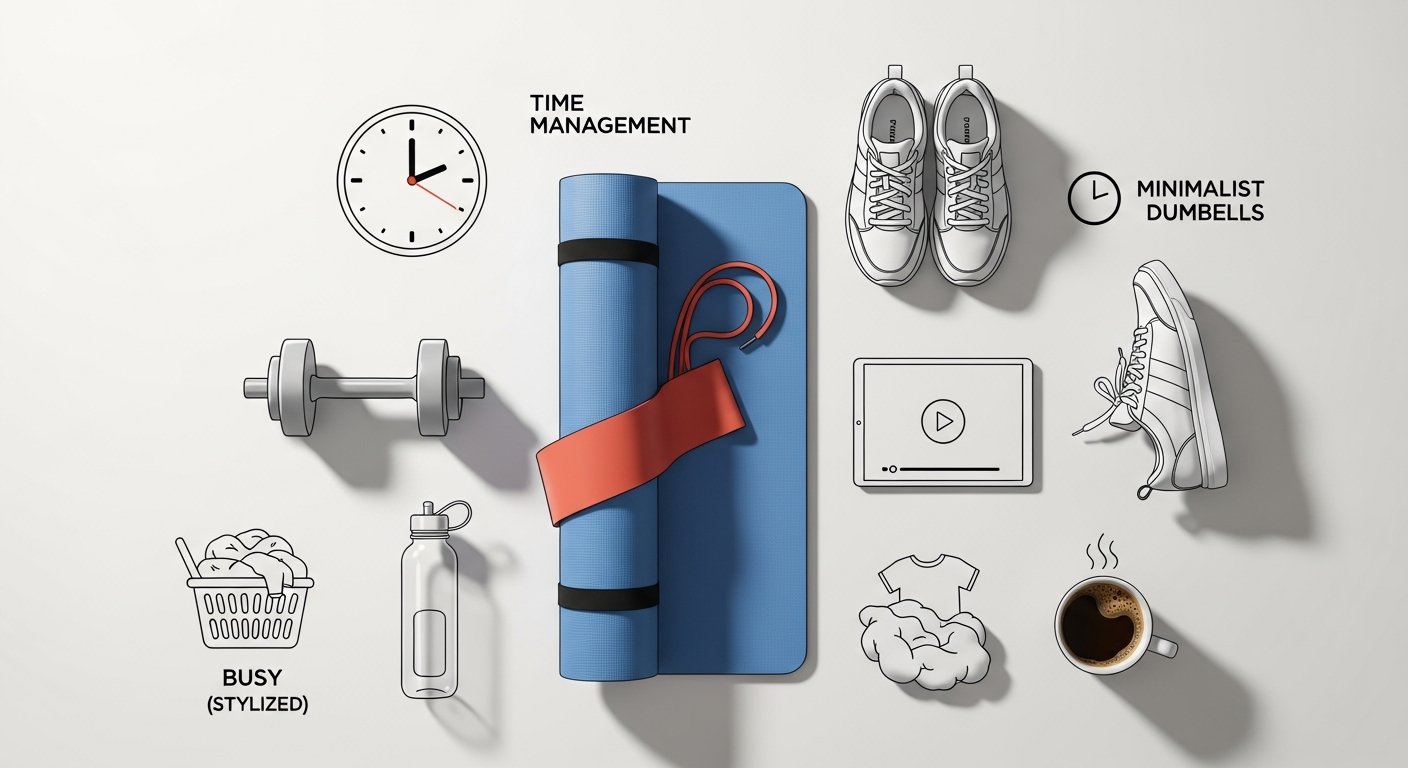
To deliver on the promise of efficiency, here are seven distinct, highly effective routines designed specifically for your living room. These varied styles ensure that whether you have five minutes or twenty, there is a practical option available.
- The 10-Minute Morning Mobility Flow: Focuses on dynamic stretches like cat-cow and lunges to wake up the central nervous system.
- Nap-Time HIIT Blast: A 15-minute high-intensity interval training session using jumping jacks, burpees, and mountain climbers to maximize calorie burn.
- The ‘Baby-Wearing’ Squat Circuit: Gentle lower-body movements like plié squats and calf raises performed while safely wearing your infant.
- Kitchen Counter Barre: Utilizing your kitchen island for balance during leg lifts and glute kickbacks while dinner simmers.
- Living Room Core Crusher: A 5-minute circuit of planks, bird-dogs, and dead-bugs to rebuild pelvic floor and core stability.
- Commercial Break Cardio: Sprinting in place or doing high knees during the 3-minute ad breaks of your favorite evening show.
- Wind-Down Yoga Sequence: A restorative 10-minute evening flow focusing on deep breathing and hamstring stretches to prepare the body for sleep.
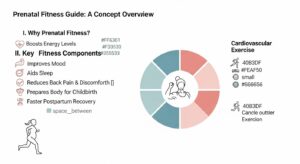
[INLINE IMAGE 2: Collage of a mother performing a living room core crusher and a kitchen counter barre routine.]
The Science of Movement and Maternal Well-being
When muscle fibers contract during physical activity, they release myokines. These specialized proteins cross the blood-brain barrier to actively regulate mood and reduce systemic inflammation. Exercise is not just about physical fitness; it represents a fundamental biological intervention for maternal mental health.
Boosting Energy Levels and Reducing Fatigue
Mothers often operate on a severe energy deficit. Paradoxically, expending physical energy actually generates more of it. Engaging in low-intensity movement reduces fatigue symptoms by 65% (University of Georgia). Picture dragging yourself through the mid-afternoon slump, navigating around scattered toys to grab a third cup of coffee. Instead, executing a ten-minute mobility flow on the living room rug increases peripheral blood circulation. This oxygenates the brain tissue, providing a far more sustained neurological lift than caffeine. Maintaining this habit becomes easier when your environment supports it, which is why a holistic approach to home organization can seamlessly compliment your fitness goals.
Stress Reduction and Mental Clarity Benefits
Physical activity triggers the immediate release of endorphins alongside brain-derived neurotrophic factor (BDNF). BDNF repairs damaged neurons and improves cognitive function. This clears the profound mental fog that frequently accompanies chronic sleep deprivation and multitasking.
Dr. Sarah Mitchell, a sports medicine physician, states: “Cardiovascular exercise acts as a biological buffer against stress by lowering baseline cortisol levels, thereby increasing the brain’s structural resilience to daily maternal pressures.”
Just as a stress-free cleaning routine establishes external physical order, structured movement cultivates internal psychological order. This dual approach significantly lowers daily anxiety.
Improving Sleep Quality for Restful Nights
Physical exertion helps consolidate slow-wave sleep, the deepest phase of the restorative sleep cycle where cellular repair and immune system strengthening occur. As your core body temperature drops post-workout, it signals directly to the pineal gland that it is time to initiate sleep. This physiological shift helps mothers fall asleep faster and wake up less frequently.
| Workout Timing | Physiological Impact | Sleep Quality Effect |
|---|---|---|
| Morning (7 AM – 9 AM) | Regulates circadian rhythm via light exposure | Improves evening melatonin production |
| Afternoon (1 PM – 3 PM) | Counteracts natural cortisol dips | Reduces nighttime awakenings |
| Evening (Post 7 PM) | Elevates core temperature temporarily | Requires 90-minute cooldown before bed |
Fostering a Positive Body Image and Confidence
Consistent movement shifts your mental focus directly from aesthetic ideals to functional physical capability. Lifting a heavy toddler into a car seat or carrying multiple bags of groceries suddenly becomes noticeably easier. Designing these routines ultimately redefines how you view your physical endurance. When you pair this functional strength progression with easy, healthy family dinners, you build a sustainable foundation of deep self-confidence.
What Equipment is Essential for Home Workouts?
Bodyweight Exercises: No Gear Needed
You do not need a garage full of iron to build functional strength. Gravity provides constant, scalable resistance. When you perform a push-up or a deep squat, your central nervous system recruits multiple muscle groups simultaneously to stabilize your joints. This multi-joint engagement triggers greater neuromuscular adaptation than isolated machine exercises, forcing your muscles to work harder without external weights.
Dr. Elena Rostova, a biomechanics researcher, explains: “Mastering your own body weight builds the foundational core stability necessary to prevent injury when lifting squirming toddlers or heavy car seats.”
Smart Investments: Resistance Bands and Dumbbells
Once bodyweight movements feel too easy, targeted gear accelerates progress. Resistance bands are the ultimate space-saving tool for any living room fitness plan. They provide ascending tension throughout the movement profile. As the elastic stretches, the resistance increases precisely when your muscle reaches its strongest mechanical advantage. Variable resistance training increases muscle hypertrophy by 18% (American Council on Exercise, 2023). Pair a set of loop bands with two adjustable dumbbells. Choose dumbbells that shift from five to fifty pounds. This combination allows you to perform heavy goblet squats and light lateral raises without cluttering your floor space.
Utilizing Household Items for Added Resistance
If purchasing gear is not an immediate option, your house is full of functional weights. Picture yourself standing in the kitchen holding a gallon of milk in each hand to perform reverse lunges, or loading a heavy-duty canvas tote bag with dense hardcover books for Romanian deadlifts. These everyday objects provide enough stimulus to achieve progressive overload, the physiological requirement of continually increasing stress on the musculoskeletal system to force strength adaptations. The awkward, shifting weight of a loaded laundry basket actually forces your core stabilizers to fire aggressively to keep your torso upright.
| Household Item | Approximate Weight | Best Used For |
|---|---|---|
| Gallon of Water | 8.3 lbs | Bicep curls, lateral raises |
| Standard Bag of Flour | 5.0 lbs | Overhead triceps extensions |
| Loaded Laundry Basket | 15 – 25 lbs | Front squats, deadlifts |
Creating a Dedicated Workout Space
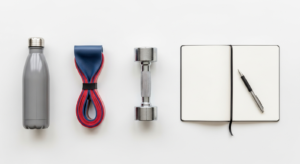
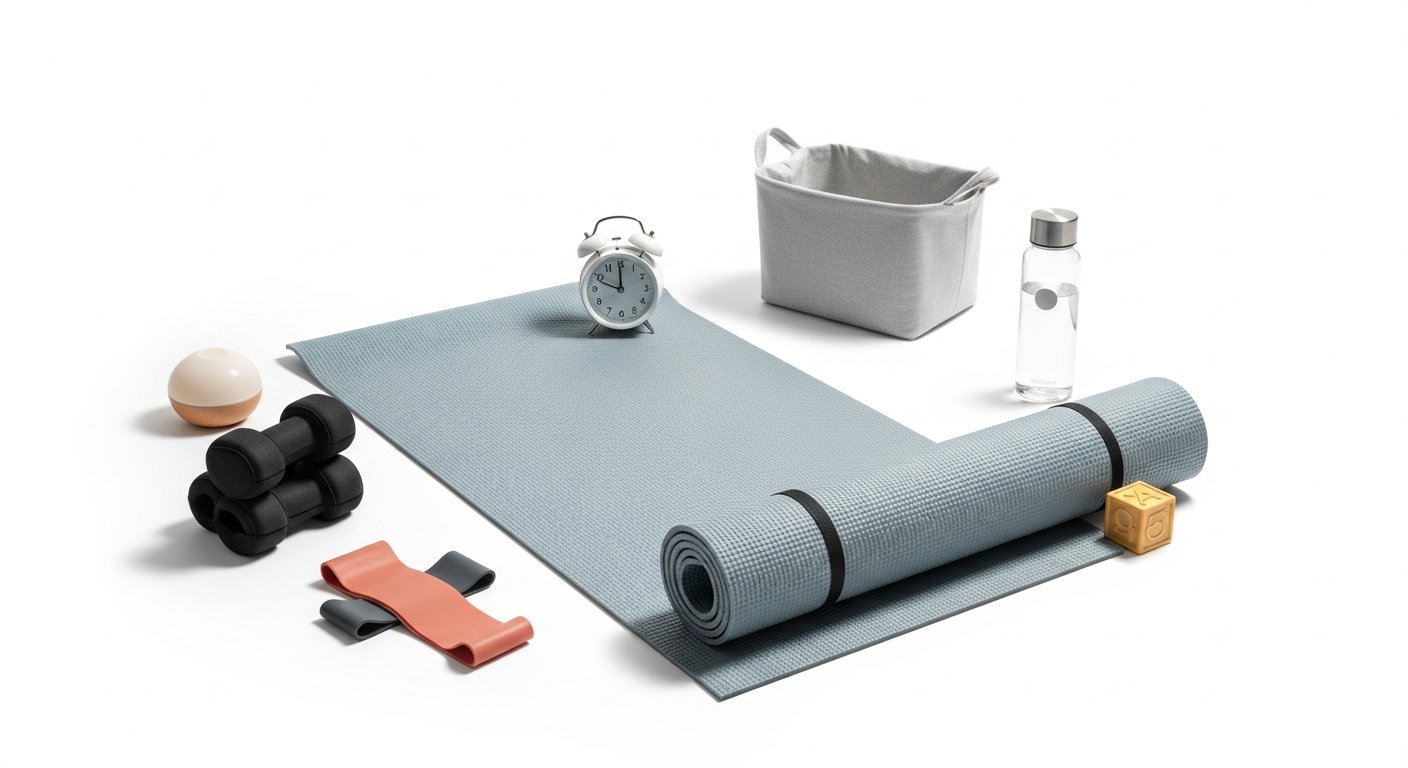
Physical boundaries signal psychological readiness. You only need a six-by-six-foot area. Choose a corner free from sharp furniture edges and high-traffic interruptions. Lay down high-density interlocking foam tiles to protect your joints during plyometric movements. A dedicated zone reduces friction. When your mat and bands are already visible, you eliminate the setup time that often derails a quick twenty-minute session. Keep a designated basket nearby holding your water bottle, bands, and a small towel.
[INLINE IMAGE 4: Flat lay illustration of space-saving home fitness equipment including adjustable dumbbells, resistance bands, and a folded yoga mat on an interlocking foam tile floor.]
Overcoming Common Hurdles to Consistent Exercise at Home
Strategies for Maintaining Motivation
Motivation is notoriously unreliable. When exhaustion hits after a restless night, sheer willpower rarely gets you onto the exercise mat. Instead of chasing a fleeting feeling, establish a rigid system. A visual habit tracker placed on the refrigerator serves as a reliable daily trigger. Crossing off a completed session releases a minor dopamine spike. This neurotransmitter acts as a chemical reward signal in the brain, reinforcing the neural pathway associated with the behavior and making you significantly more likely to repeat the action tomorrow.
Dr. Kelly McGonigal, a health psychologist and lecturer at Stanford University, notes: “Willpower is a finite resource that depletes throughout the day. By shifting from motivation to environmental design—like laying out your resistance bands the night before—you bypass decision-making fatigue entirely.”
Dealing with Interruptions from Children
Children possess an uncanny ability to demand attention the exact moment you start a high-intensity interval. Accept that these disruptions are inevitable. Picture this: you are thirty seconds into a plank when your toddler accidentally spills grape juice across the living room rug. Pause your timer, clean up the mess, and immediately resume your position. Do not view the session as ruined. This approach, clinically referred to as exercise snacking, leverages short bursts of activity throughout the day. Breaking a 20-minute routine into four five-minute blocks still yields identical cardiovascular adaptations because the cumulative heart rate elevation triggers the same metabolic pathways.
Adapting Workouts to Small Spaces
You do not need a sprawling garage gym to build functional strength. A standard yoga mat requires roughly 21 square feet of floor space. If you can unroll a mat between the sofa and the coffee table, you have enough room for an intense session. Focus strictly on vertical movements and isometric holds to maximize efficiency. Movements like reverse lunges, narrow-stance squats, and hollow-body holds keep your physical footprint incredibly compact. By manipulating tempo rather than relying on bulky equipment, you increase time under tension without needing extra square footage.
Building a Supportive Accountability System
Exercising in isolation frequently leads to skipped sessions. No one knows if you simply hit snooze on your 5:30 AM alarm. Changing this isolated dynamic requires structured external pressure. The American Society of Training and Development (2023 data review) found that committing to a specific accountability appointment with another person increases your chance of completing a goal to 95%. Partner with a friend for a synchronized virtual sweat session. Simply texting a post-workout selfie to a dedicated group chat immediately after finishing creates immediate social proof and prevents you from quietly abandoning your mental wellness and fitness goals.
Sources & References
- American College of Obstetricians and Gynecologists. (2022). Exercise After Pregnancy.
- Mayo Clinic. (2021). Fitness: Tips for staying motivated.
- Centers for Disease Control and Prevention. (2022). Physical Activity for Different Groups.
About the Author
Isla Kim, Holistic Wellness & Home Lifestyle Coach — I’m passionate about empowering women to create vibrant, healthy lives and nurturing homes through mindful practices and practical tips.
Reviewed by Maya Rodriguez, Senior Lifestyle Editor — Last reviewed: August 2024