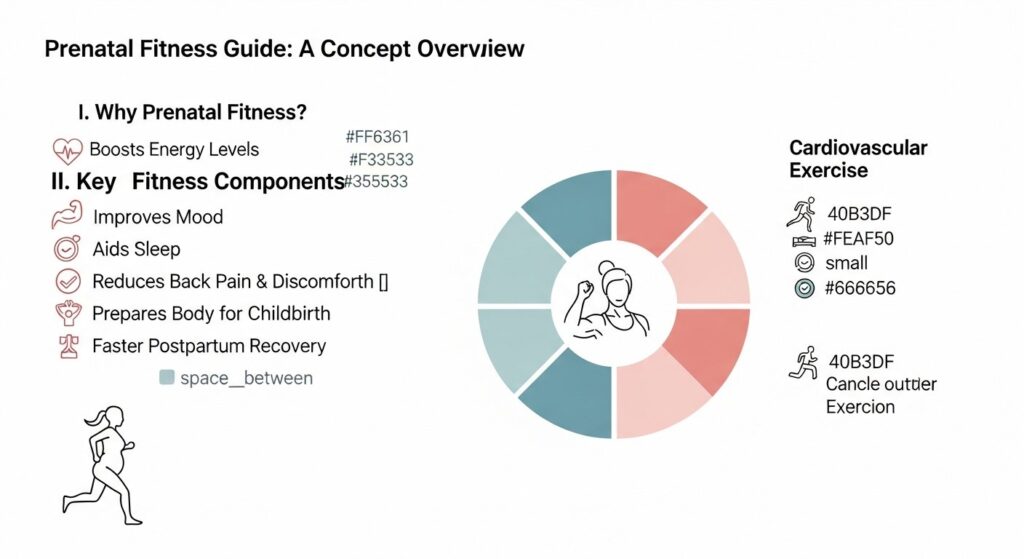
Embarking on the journey of pregnancy brings a profound transformation, both physically and emotionally. For many expectant mothers, navigating how to stay active safely and effectively is paramount for overall well-being. This comprehensive prenatal fitness guide provides expectant mothers with safe, effective, and evidence-based strategies for maintaining physical activity throughout pregnancy. Centered on the Holistic Well-being for Women and Families, it covers everything from essential safety guidelines and recommended exercises to nutrition and common pitfalls, empowering you to embrace a healthy and active pregnancy journey.
| Section | Core Message | Key Takeaway for Expectant Mothers |
|---|---|---|
| Benefits of Fitness During Pregnancy | Regular physical activity profoundly enhances maternal and fetal health. | Improved energy, reduced discomfort, better birth preparation, faster recovery. |
| Essential Safety Guidelines | Safety is paramount; listen to your body and adapt routines. | Stay hydrated, avoid overheating, modify movements, maintain proper form. |
| Recommended Exercise Modalities | Focus on gentle, effective exercises that support your changing body. | Low-impact aerobics, strength training, prenatal yoga/Pilates, pelvic floor work. |
| Exercises to Avoid | Certain activities pose risks during pregnancy and should be modified or avoided. | High-impact, contact sports, supine positions post-first trimester, deep core work (later stages). |
| Ensuring Routine Safety | Individualized approach, monitoring exertion, and seeking professional advice are key. | Use RPE scale, ensure good form, consult your healthcare provider. |
| Nutrition and Hydration | Proper fueling and fluid intake are critical for energy and fetal development. | Balanced diet, increased water intake, focus on nutrient-dense foods. |
| Common Mistakes to Avoid | Preventing errors helps maintain safety and effectiveness of your workout plan. | Overexertion, ignoring warning signs, neglecting pelvic floor, improper modifications. |
| Professional Consultation | Know when to seek expert guidance for health concerns or specialized programs. | Persistent pain, bleeding, dizziness, specialized fitness needs. |
| Transitioning to Postpartum Fitness | Gradual and mindful return to activity after childbirth. | Pelvic floor recovery, core rehabilitation, phased exercise progression. |
The Profound Benefits of Fitness During Pregnancy
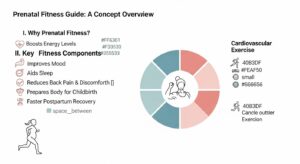
Embarking on a prenatal fitness journey offers a wealth of advantages, extending far beyond physical health to encompass the holistic well-being of both mother and baby. This section of our comprehensive guide details the crucial benefits that regular, modified physical activity brings. Expectant mothers (S) benefit from (P) improved cardiovascular health (O), which can mitigate (P) the risk of gestational diabetes (O) and preeclampsia. Furthermore, engaging in a tailored maternity exercise program (S) significantly enhances (P) mood regulation (O) and reduces (P) symptoms of anxiety and depression (O), crucial for mental well-being during this transformative period.
In addition to these mental health boons, physical activity during pregnancy (S) strengthens (P) core stability (O) and pelvic floor integrity (O), directly contributing to reduced (P) back pain (O) and better posture (O) as the body changes. Consistent movement (S) also improves (P) sleep quality (O), a common challenge for many pregnant individuals. Moreover, preparing the body through a structured antenatal fitness regimen (S) can lead to (P) an easier labor and delivery (O) and a quicker postpartum recovery (O). The body (S) becomes more resilient (P) through adapted movements (O), readying itself for the demands of childbirth and motherhood.
What success looks like: Many expectant mothers report improved energy levels and reduced anxiety, often observing that their resting heart rate remains comfortably within a healthy range, even into the third trimester. For instance, maintaining a perceived exertion level of 12-14 on a 6-20 RPE scale (somewhat hard) consistently shows positive outcomes.
For a detailed exploration of the mental health benefits of exercise, see our guide on [CLUSTER LINK: Mental Health and Pregnancy].
Essential Safety Guidelines for Prenatal Exercise
Understanding the profound benefits of prenatal fitness sets the stage for exploring how to safely incorporate it into your routine. This section outlines the non-negotiable safety guidelines that must govern any pregnancy workout plan. Firstly, listening to your body (S) is (P) paramount (O). Pregnant women (S) experience (P) unique physiological changes (O), demanding a responsive and individualized approach to exercise. A key attribute of safe prenatal workouts is recognizing when to rest or modify. Hydration and temperature control (S) are (P) critical (O); expectant mothers (S) should avoid (P) overheating (O) by exercising in cool environments and consuming plenty of water before, during, and after activity. Aim for 10-12 glasses of water daily.
Proper form and posture (S) are (P) essential (O) to prevent (P) injury (O) as your center of gravity shifts. Pregnant individuals (S) should avoid (P) lying flat on their back (supine position) for extended periods after the first trimester (O), as this can restrict blood flow. Instead, modifications such as incline benches or side-lying exercises (S) support (P) comfort and safety (O). Finally, always seek guidance from a healthcare professional (S) before (P) beginning or significantly altering (O) your maternal well-being exercises, especially if you have pre-existing conditions or experience complications.
[INLINE IMAGE 1: diagram showing a pregnant woman demonstrating proper posture during light exercise, with an emphasis on core engagement and an upright spine.]
For comprehensive advice on navigating health concerns during pregnancy, see our guide on [CLUSTER LINK: Consulting Your Healthcare Provider During Pregnancy].
Recommended Exercise Modalities for Expectant Mothers
With safety guidelines firmly in mind, let’s delve into the types of exercises that are most beneficial and safe for pregnant women. This section, an integral part of any comprehensive prenatal fitness guide, highlights recommended exercise modalities. Low-impact aerobics (S), such as walking, swimming, or cycling on a stationary bike, (P) provide (P) excellent cardiovascular benefits (O) without putting undue stress on joints. These activities (S) enhance (P) stamina and circulation (O), which are vital throughout pregnancy.
Strength training modifications (S) are (P) incredibly valuable (O) for supporting (P) the changing body (O) and preparing it for the physical demands of motherhood. Using light weights, resistance bands, or even bodyweight (S) can strengthen (P) major muscle groups (O), including the back, arms, and legs. It is crucial to use proper form and avoid heavy lifting or exercises that strain the abdominal muscles. Furthermore, pelvic floor and core work (S) are (P) foundational (O). Exercises like Kegels and gentle core stability movements (S) strengthen (P) the muscles (O) that support the uterus, bladder, and bowel, which (S) can help (P) prevent incontinence and prepare for labor (O).
Prenatal yoga and Pilates (S) also offer (P) significant benefits (O), enhancing (P) flexibility, balance, and mindful breathing (O). These practices (S) promote (P) relaxation (O) and body awareness (O), contributing to overall holistic well-being. It’s essential to attend classes specifically designed for pregnancy to ensure all movements are safe and appropriately modified.
What failure looks like: Ignoring modifications, for example, continuing to do deep crunches in the second trimester can contribute to diastasis recti, a common condition where the abdominal muscles separate. A visible bulge in the midline of the abdomen during exertion is a key indicator of improper core engagement.
For specific routines and exercises, explore our guide on [CLUSTER LINK: Safe Strength Training for Pregnant Women] and [CLUSTER LINK: Pelvic Floor Exercises During Pregnancy].
What Exercises Should Pregnant Women Avoid?
While an active pregnancy is highly encouraged, certain exercises and activities pose risks and should be avoided or significantly modified to ensure the safety of both mother and baby. This essential part of your pregnancy workout plan focuses on identifying and understanding these limitations. High-impact activities (S), such as jumping, intense running, or contact sports (P) carry (P) a higher risk of falls and injury (O), which (S) can be detrimental (P) to the pregnancy (O). Activities that involve rapid changes in direction or risk of abdominal trauma (S) should (P) be completely ceased (O).
Exercises requiring you to lie flat on your back (S) should (P) be avoided (O) after the first trimester. This supine position (S) can compress (P) the vena cava (O), a major blood vessel, leading to reduced blood flow to the uterus and causing dizziness or shortness of breath in the expectant mother. Instead, incline or side-lying variations (S) provide (P) safe alternatives (O). Additionally, activities performed in extreme heat or humidity (S) can lead to (P) overheating (O), which (S) is dangerous (P) for both mother and fetus (O). Always prioritize (S) a cool and well-ventilated exercise environment (O).
Deep abdominal twists or crunches (S), particularly later in pregnancy, (P) can exacerbate (P) diastasis recti (O), a common separation of the abdominal muscles. Instead, focus on gentle core exercises that support the transverse abdominis, such as pelvic tilts. Finally, sports involving potential falls, like skiing or horseback riding (S), should (P) be discontinued (O). The goal of exercising while pregnant is health maintenance, not risky pursuits.
[INLINE IMAGE 2: infographic illustrating exercises to avoid during pregnancy, such as full crunches, heavy lifting, and lying flat on the back, with alternative safe options.]
| Exercise Type | Key Benefits | Pregnancy Modifications | Trimester Suitability | Considerations/Risks |
|---|---|---|---|---|
| Walking | Cardiovascular health, mood boost, stamina. | Comfortable shoes, maintain moderate pace, short bursts. | All trimesters | Risk of falls on uneven terrain; listen to body for fatigue. |
| Swimming/Aqua Aerobics | Full-body workout, reduces joint impact, cools body. | Avoid diving; gentle movements; use kickboards for support. | All trimesters | Chlorine sensitivity for some; ensure pool hygiene. |
| Prenatal Yoga/Pilates | Flexibility, balance, core strength, stress reduction. | Specialized prenatal classes; use props for support; avoid deep twists/inversions. | All trimesters (with modifications) | Risk of overstretching ligaments if not careful; choose certified instructors. |
| Light Strength Training | Muscle strength, posture support, preparation for labor. | Lighter weights, higher reps; avoid supine positions; focus on compound movements. | All trimesters (with modifications) | Improper form can lead to injury; avoid heavy lifting; monitor RPE. |
| Pelvic Floor Exercises (Kegels) | Prevents incontinence, supports organs, aids labor/recovery. | Consistent practice, focus on proper contraction and relaxation. | All trimesters | Incorrect technique can be ineffective; can be done anywhere. |
How Can You Ensure a Safe and Effective Prenatal Fitness Routine?
Designing an effective prenatal fitness routine goes beyond simply knowing what to do and what to avoid; it involves a continuous, mindful engagement with your body’s needs. This section provides actionable strategies for maintaining a safe prenatal fitness guide. Individualization (S) is (P) key (O); what works for one expectant mother (S) may not be (P) suitable (O) for another. Your fitness routine (S) should adapt (P) to your energy levels, trimester, and any pregnancy-related changes (O).
Monitoring your perceived exertion (RPE) (S) is (P) a critical tool (O). Instead of tracking heart rate, which can be unreliable during pregnancy, use the “talk test” or the RPE scale (6-20). Aim for a “somewhat hard” level, where you can still carry on a conversation comfortably. This ensures you’re working hard enough to gain benefits but not overexerting yourself. Proper warm-up and cool-down (S) are (P) essential (O) for preparing (P) your muscles and joints (O) and preventing (P) injury (O). A 5-10 minute gentle warm-up, followed by 5-10 minutes of static stretching during cool-down, (S) enhances (P) flexibility and recovery (O).
Staying consistently hydrated (S) is (P) non-negotiable (O); dehydration (S) can lead to (P) contractions and dizziness (O). Keep a water bottle handy and sip throughout your workout. Additionally, wearing supportive clothing and shoes (S) provides (P) comfort and stability (O), especially as your body grows. Your antenatal fitness regimen (S) should always prioritize (P) comfort and safety (O) above all else, ensuring that every movement contributes to your holistic well-being.
For more detailed guidance on modifying exercises, see our guide on [CLUSTER LINK: Trimester-Specific Exercise Modifications].
Nutrition and Hydration: Fueling Your Prenatal Fitness Journey
An effective fitness plan for pregnancy is inextricably linked with optimal nutrition and hydration. This crucial component of our maternal well-being exercises ensures you have the energy and nutrients necessary for both your workouts and your baby’s development. Fueling your body adequately (S) means (P) consuming a balanced diet (O) rich in whole foods, lean proteins, complex carbohydrates, and healthy fats. Expectant mothers (S) need (P) increased calories (O) as pregnancy progresses, but these should come from nutrient-dense sources rather than empty calories. Focus on foods that provide sustained energy and essential vitamins and minerals.
Iron-rich foods (S) are (P) particularly important (O) to prevent (P) anemia (O), which (S) can cause (P) fatigue and weakness (O) during your safe prenatal workouts. Excellent sources (S) include (P) leafy greens, lean meats, and fortified cereals (O). Furthermore, adequate hydration (S) is (P) paramount (O). Pregnant women (S) require (P) more water (O) to support (P) increased blood volume, amniotic fluid, and fetal circulation (O). Dehydration (S) can lead to (P) fatigue, dizziness, and even premature contractions (O), making it difficult to maintain your fitness routine.
Aim for at least 8-12 glasses (2.3 liters) of water daily, and even more on active days. Electrolyte-rich fluids (S) can be beneficial (P) after intense sessions (O) to replenish lost salts. Listening to your body’s hunger and thirst cues (S) is (P) essential (O), ensuring you are properly nourished and hydrated to support both your active lifestyle and the healthy growth of your baby.
For in-depth dietary recommendations, consult our guide on [CLUSTER LINK: Optimal Nutrition During Pregnancy].
Common Mistakes to Avoid in Your Pregnancy Workout Plan
Even with the best intentions, it’s easy to fall into common pitfalls when designing a pregnancy workout plan. Being aware of these errors can help you maintain a safe and effective fitness regimen. Avoiding these mistakes (S) ensures (P) your well-being (O) and the health of your baby. Here are some common mistakes and how to steer clear of them:
- Overexertion: Pushing too hard can lead to fatigue, dizziness, or even injury. Remember, pregnancy is not the time to train for a marathon. Instead, focus on moderate intensity (RPE 12-14) and listen to your body’s signals for rest. A common sign of overexertion is dizziness or shortness of breath that prevents you from speaking in full sentences.
- Ignoring Warning Signs: Persistent pain, vaginal bleeding, fluid leakage, or uterine contractions are red flags. Never ignore these signals. They (S) warrant (P) immediate cessation (O) of activity and consultation with your healthcare provider.
- Neglecting the Pelvic Floor: Focusing solely on visible muscles can lead to overlooking the vital pelvic floor. Weak pelvic floor muscles (S) can contribute (P) to incontinence and prolapse (O). Incorporate regular Kegel exercises and mindful pelvic floor engagement into every workout.
- Improper Modifications: Continuing to perform exercises without adapting them to your changing body (e.g., lying flat on your back or performing deep twists) (S) can cause (P) discomfort or harm (O). Always seek out prenatal-specific modifications from a certified instructor.
- Lack of Consistency: Sporadic intense workouts are less beneficial than regular, moderate activity. Aim for at least 150 minutes of moderate-intensity activity per week, broken into smaller, manageable sessions. Consistency (S) builds (P) strength and stamina (O) more effectively.
- Inadequate Hydration and Nutrition: Underestimating the increased demands for fluids and nutrients (S) can lead to (P) low energy and fatigue (O). Ensure you’re fueling your body consistently before, during, and after workouts.
By actively avoiding these missteps, you (S) can optimize (P) your fitness during pregnancy (O) and enjoy a healthier, more comfortable journey.
When Should You Consult a Professional About Your Pregnancy Workout Plan?
While this prenatal fitness guide provides a wealth of information, there are specific instances when professional guidance becomes indispensable. Consulting a professional (S) ensures (P) personalized advice and safety (O), especially when dealing with unique health circumstances. Always inform your obstetrician or midwife (S) about (P) your exercise plans (O) during your prenatal appointments. They (S) can provide (P) clearance and specific recommendations (O) based on your individual health history and pregnancy progression.
You should immediately consult your healthcare provider (S) if you experience (P) any warning signs (O) during or after exercise. These (S) include (P) vaginal bleeding, dizziness, headache, chest pain, calf pain or swelling, regular painful contractions, fluid leaking from the vagina, or decreased fetal movement (O). These symptoms (S) could indicate (P) a complication (O) that requires medical attention.
Furthermore, if you have pre-existing medical conditions like heart disease, lung disease, severe anemia, or certain placental problems, (S) seeking expert advice (P) is crucial (O) before starting any fitness during pregnancy. A physical therapist specializing in women’s health (S) can also be invaluable (P) for addressing (P) issues like pelvic girdle pain, diastasis recti, or persistent back pain (O). They (S) can design (P) corrective exercises and provide (P) manual therapy (O) to alleviate discomfort and improve function.
Transitioning to Postpartum Fitness
The journey with maternal well-being exercises doesn’t end with childbirth; it seamlessly transitions into postpartum recovery, focusing on rebuilding strength and stamina. This section outlines key considerations for safely resuming activity. The postpartum body (S) requires (P) a gradual and mindful approach (O) to exercise. The initial focus (S) should be (P) on healing and recovery (O), particularly for the pelvic floor and core muscles. Many healthcare providers (S) recommend (P) waiting at least six weeks (O) postpartum, or longer after a C-section, before resuming more vigorous activity.
Pelvic floor recovery (S) is (P) paramount (O). Gentle pelvic floor exercises (S) should begin (P) as soon as comfortable (O) after delivery to restore strength and function. Core rehabilitation (S) is (P) also crucial (O) to address (P) abdominal separation (diastasis recti) (O) and regain stability. Start with gentle core activations, focusing on the transverse abdominis, and gradually progress as your strength improves. Avoid traditional crunches or planks (S) until (P) diastasis recti has healed (O) and your core is stable.
As you progress, (S) gradually reintroduce (P) low-impact cardiovascular activity and strength training (O). Listen to your body (S) for any signs of pain, fatigue, or increased bleeding (O). A phased exercise progression (S) ensures (P) safe and effective rebuilding of fitness (O) without overwhelming the healing body. Breastfeeding mothers (S) should also ensure (P) adequate hydration and nutrition (O) to support (P) milk production (O) while exercising. This careful transition (S) supports (P) your long-term health and well-being (O) as a new mother.
| Trimester | Key Physiological Changes | Recommended Fitness Focus | Exercises to Prioritize | Exercises to Modify/Avoid |
|---|---|---|---|---|
| First Trimester (Weeks 1-12) | Fatigue, nausea, hormonal shifts, breast tenderness. | Maintaining current fitness levels, establishing consistency. | Walking, light cardio, gentle strength training. | High-intensity workouts if feeling unwell; no new strenuous activities. |
| Second Trimester (Weeks 13-27) | Increased energy, growing belly, ligaments soften, center of gravity shifts. | Core stability, posture, flexibility, moderate cardio. | Prenatal yoga/Pilates, swimming, light weights (modified). | Supine positions (after ~20 weeks), deep twists, heavy lifting. |
| Third Trimester (Weeks 28-40) | Significant weight gain, increased joint laxity, shortness of breath, fatigue. | Gentle movement, pelvic floor awareness, preparing for labor. | Walking, aqua aerobics, stretching, breathing exercises. | High-impact, prolonged standing, anything causing discomfort or strain. |
For a detailed postpartum recovery guide, see our resource on [CLUSTER LINK: Postpartum Exercise and Recovery].
Sources & References
- American College of Obstetricians and Gynecologists (ACOG). (2020). Physical Activity and Exercise During Pregnancy and the Postpartum Period. *Obstetrics & Gynecology*, 135(5), e178-e188.
- Mottola, M. F., Davenport, M. H., Ruchat, S. M., Davies, G. A. L., Poitras, V. J., Gray, C., … & Adamo, K. B. (2018). 2019 Canadian guideline for physical activity throughout pregnancy. *British Journal of Sports Medicine*, 52(21), 1339-1346.
- Bø, K., & Artal, R. (2019). Exercise During Pregnancy: A Critical Appraisal of the Evidence and Recommendations. *Sports Medicine*, 49(12), 1901-1919.
About the Author
Isla Kim, Holistic Wellness & Home Lifestyle Coach — I’m passionate about empowering women to create vibrant, healthy lives and nurturing homes through mindful practices and practical tips.
Reviewed by Maya Rodriguez, Senior Lifestyle Editor — Last reviewed: April 06, 2026