Understanding Your Body’s Needs: The Foundation of a Good Night’s Sleep
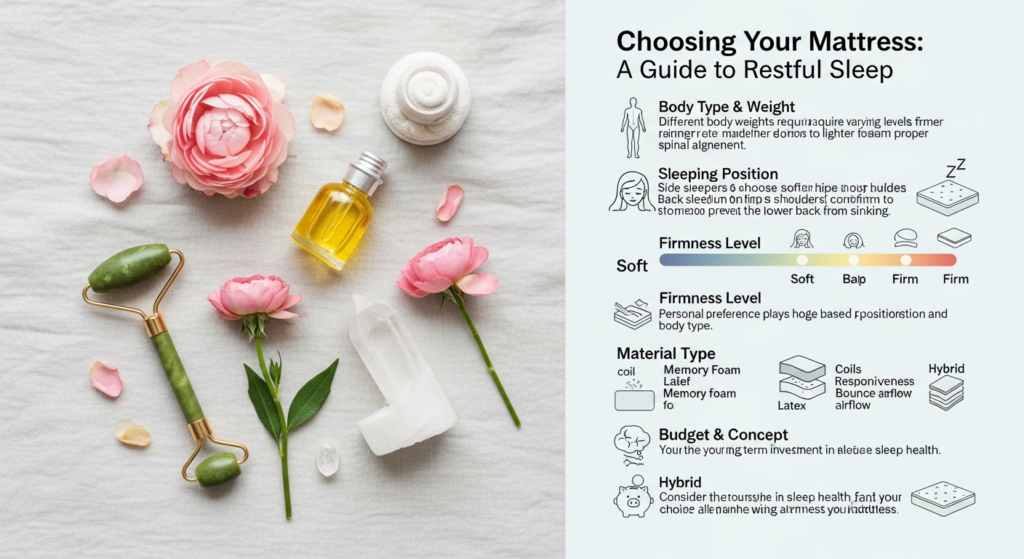
Just as you meticulously plan the layout and functionality during a home renovation, considering every family member’s needs, selecting a mattress requires a deep understanding of your own unique physiological requirements. Your body isn’t generic, and neither should your sleep surface be. Identifying these core needs is the critical first step in finding your perfect sleep sanctuary.
Body Weight and Distribution
- Lighter Individuals (Under 130 lbs): Generally, lighter sleepers need a softer mattress to allow for sufficient contouring and pressure relief. A mattress that’s too firm won’t compress enough under their weight, leading to pressure points and discomfort, especially at the shoulders and hips.
- Average Weight Individuals (130-230 lbs): Most mattresses are designed with this weight range in mind. A medium-firm mattress often provides the ideal balance of support and comfort. However, individual sleep style will play a significant role in fine-tuning this choice.
- Heavier Individuals (Over 230 lbs): Heavier sleepers require significantly more support to prevent excessive sinking and maintain spinal alignment. Firmer mattresses, often with robust coil systems or high-density foams, are usually recommended. Edge support also becomes particularly important to prevent rolling off or feeling unsupported at the perimeter.
Addressing Pain Points and Health Conditions
Your mattress can be a powerful tool in managing chronic pain or supporting specific health needs. Ignoring these can exacerbate issues and lead to further discomfort.
- Back Pain (Lower, Upper, Sciatica): For lower back pain, a mattress that maintains the natural curvature of your spine is paramount. Often, a medium-firm to firm mattress with good lumbar support is recommended, but contouring is also crucial to fill the gap at the small of your back. Too soft, and you might sink into an uncomfortable “hammock” position; too firm, and it might not provide enough give for your spine’s natural curve.
- Joint Pain (Hips, Shoulders, Arthritis): Pressure relief is the keyword here. Memory foam or latex mattresses excel at cradling joints and distributing weight evenly, significantly reducing pressure points that can aggravate arthritis or bursitis. Side sleepers with shoulder or hip pain will particularly benefit from materials that allow these areas to sink in comfortably without bottoming out.
- Allergies and Asthma: For those prone to allergies, the mattress material can make a huge difference. Natural latex mattresses are inherently hypoallergenic and resistant to dust mites, mold, and mildew. Memory foam is also generally good for allergy sufferers as its dense structure discourages dust mite habitation. Always look for certifications like OEKO-TEX or CertiPUR-US for assurances on material safety and absence of harmful chemicals.
- Temperature Regulation: Are you a “hot sleeper”? Do you often wake up sweating, even in a cool room? Traditional memory foam can sometimes retain heat. Look for mattresses with cooling technologies like gel-infused memory foam, open-cell foam structures, hybrid mattresses with good airflow from coils, or natural latex, which tends to sleep cooler.
Understanding these personal nuances is the bedrock. Just as you wouldn’t embark on a major home renovation without first assessing your family’s daily routines and long-term goals, you shouldn’t choose a mattress without a thorough self-assessment of your body’s specific demands.
Decoding Sleep Styles: What Position Do You Favor?
Your preferred sleeping position is one of the most significant factors in determining the ideal mattress firmness and type. Each position places different demands on your spine and pressure points, requiring a specific kind of support and cushioning.
Side Sleepers: The Curvy Comfort Seekers
Side sleeping is one of the most common positions, but it also creates distinct pressure points at the shoulders and hips. To maintain proper spinal alignment, a side sleeper needs a mattress that allows these wider body parts to sink in sufficiently while still supporting the waist.
- Ideal Firmness: Medium-soft to medium. This allows for contouring around the shoulders and hips, preventing pressure build-up and keeping the spine relatively straight.
- Recommended Materials:
- Memory Foam: Excellent for contouring and pressure relief, molding to the curves of your body.
- Latex: Offers a balance of contouring and responsiveness, preventing that “stuck” feeling while still relieving pressure.
- Hybrid: Can be a great option, combining the pressure relief of foam layers with the targeted support and bounce of an innerspring core.
- What to Avoid: Very firm mattresses, which will not allow the shoulders and hips to sink, leading to misalignment and pain.
Back Sleepers: The Spinal Aligners
Back sleepers generally need a mattress that supports the natural “S” curve of their spine, particularly in the lumbar region. The goal is to keep the spine in a neutral position, preventing it from arching too much or sinking too deeply.
- Ideal Firmness: Medium-firm. This provides sufficient support to keep the hips from sinking too low, while still offering enough give to cradle the lower back.
- Recommended Materials:
- Memory Foam: Can be good if it’s a medium-firm density, offering contouring without excessive sinking. Zoned support memory foam is particularly beneficial.
- Latex: Provides consistent, buoyant support that helps maintain spinal alignment.
- Hybrid: Often an excellent choice, as the coils provide robust support, and the comfort layers offer the necessary cushioning.
- Innerspring: Traditional innerspring mattresses, especially those with good coil count and comfort layers, can work well if they provide adequate lumbar support.
- What to Avoid: Mattresses that are too soft, as they will cause the hips to sink too deeply, creating an uncomfortable arch in the lower back.
Stomach Sleepers: The Flat & Supported
Stomach sleeping is often considered the most problematic position for spinal health, as it can cause the lower back to arch excessively. The key for stomach sleepers is a mattress that keeps the body as flat and aligned as possible.
- Ideal Firmness: Firm to medium-firm. A firmer surface prevents the hips and abdomen from sinking too far into the mattress, which would otherwise over-arch the lower back.
- Recommended Materials:
- Innerspring: Often a good choice due to their inherent firmness and support.
- Hybrid: Can offer a good balance if the comfort layer isn’t too thick or soft, ensuring the support layers do their job.
- Firm Latex or Memory Foam: If opting for foam, choose high-density, firm versions that provide robust support without excessive contouring.
- What to Avoid: Soft mattresses, especially memory foam, that allow the midsection to sink, leading to severe lower back arching and potential pain.
Combination Sleepers: The Versatile Dreamers
If you toss and turn, shifting between two or more positions throughout the night, you’re a combination sleeper. You need a mattress that can adapt to your movements and provide consistent support and pressure relief in various orientations.
- Ideal Firmness: Medium to medium-firm. This firmness offers enough give for side sleeping but enough support for back and occasional stomach sleeping.
- Recommended Materials:
- Hybrid: Often the best choice due to their responsiveness (easy to change positions) combined with pressure relief and support.
- Latex: Naturally responsive and supportive, allowing for easy movement without feeling “stuck.”
- Responsive Memory Foam: Some newer memory foams are designed to be more responsive than traditional versions, offering a good compromise.
- What to Avoid: Very soft or very firm mattresses, as they will likely only be comfortable in one position, making transitions difficult or uncomfortable.
By understanding how your body interacts with the mattress in your primary sleep position, you can narrow down your options significantly, ensuring that your choice truly supports your unique sleep journey.
The Mattress Material Matrix: Innerspring, Memory Foam, Latex, Hybrid, and Air
Innerspring Mattresses: The Traditional Bouncers
These are the classic mattresses, characterized by a coil support system. They’ve evolved significantly over the years.
- Construction: A core of steel coils, often topped with comfort layers of various foams, fibers, or even mini-coils. Coil types include Bonnell, offset, continuous, and pocketed coils.
- Feel: Generally bouncy and responsive, with good airflow. They offer a more traditional “on top of the bed” feel.
- Pros:
- Excellent airflow, making them cooler than traditional foam.
- Relatively affordable, especially basic models.
- Good edge support (especially with reinforced edges).
- Bouncy feel makes it easy to move around and get in/out of bed.
- Cons:
- Can transmit motion easily, which might disturb partners.
- Less contouring and pressure relief compared to foam or latex.
- Can sag over time if coils are not durable.
- Potential for noise (squeaking) over time.
- Best For: Budget-conscious buyers, stomach sleepers who need firm support, those who prefer a traditional bouncy feel, hot sleepers (though hybrids are often better).
Memory Foam Mattresses: The Contouring Hug
Developed by NASA, memory foam is renowned for its ability to conform to the body’s shape.
- Construction: Made from viscoelastic polyurethane foam, which reacts to body heat and pressure. Typically consists of multiple layers of different foam densities for support and comfort.
- Feel: A distinct “hug” or “sink-in” feel. It cradles the body, distributing weight evenly and relieving pressure points. Slower to respond to movement.
- Pros:
- Exceptional pressure relief and contouring.
- Excellent motion isolation, ideal for couples.
- Hypoallergenic properties (dense structure resists dust mites).
- Can alleviate pain by supporting the natural spinal alignment.
- Cons:
- Can retain heat (look for gel-infused, open-cell, or copper-infused foams for cooling).
- “Off-gassing” odor initially (though most reputable brands use CertiPUR-US certified foams to minimize VOCs).
- Can make it feel “stuck” for combination sleepers (unless it’s a more responsive type).
- Heavier to move.
- Best For: Side sleepers, those with joint or back pain, couples who value motion isolation, allergy sufferers.
Latex Mattresses: The Natural Resilience
Latex mattresses are made from latex foam, derived from rubber trees (natural latex) or synthetic compounds (synthetic latex), or a blend.
- Construction: Layers of latex foam, often with different densities for support and comfort. Can be made using Dunlop or Talalay processes, which affect density and feel.
- Feel: Responsive and buoyant, with a slight contouring feel. It pushes back against your body, providing a floating sensation rather than a sink-in hug.
- Pros:
- Highly durable and long-lasting.
- Naturally hypoallergenic, antimicrobial, and resistant to dust mites, mold, and mildew.
- Excellent breathability and temperature neutrality (especially natural latex).
- Good responsiveness makes it easy to change positions.
- Good motion isolation.
- Eco-friendly options available (natural latex).
- Cons:
- Can be significantly more expensive than other types.
- Very heavy to move.
- Some individuals may have latex allergies (though usually only with direct skin contact).
- Less of a deep contouring hug than memory foam.
- Best For: Eco-conscious buyers, allergy sufferers, those seeking durability and natural materials, combination sleepers, hot sleepers, those with back pain needing buoyant support.
Hybrid Mattresses: The Best of Both Worlds
Hybrids combine the best features of innerspring and foam/latex mattresses.
- Construction: Typically features a core of individually wrapped pocketed coils for support and bounce, topped with layers of memory foam, latex, or other specialized foams for comfort and pressure relief.
- Feel: A balanced feel, offering the responsiveness and airflow of coils with the contouring and pressure relief of foam/latex.
- Pros:
- Excellent balance of support, comfort, and pressure relief.
- Good airflow and temperature regulation due to the coil layer.
- Reduced motion transfer compared to traditional innerspring.
- Good edge support.
- Suitable for a wide range of sleepers and positions.
- Cons:
- Can be more expensive than pure foam or innerspring options.
- Heavier than many other mattress types.
- The feel can vary greatly between brands depending on the types and thickness of comfort layers.
- Best For: Couples with different preferences, combination sleepers, those wanting the benefits of both foam and coils, individuals seeking targeted support and pressure relief.
Airbeds: The Adjustable Firmness
Not to be confused with inflatable camping mattresses, these are designed for permanent bedroom use.
- Construction: Features air chambers as the primary support system, topped with comfort layers of foam or padding. An electric pump and remote allow users to adjust the air pressure in the chambers.
- Feel: Highly customizable firmness, from very soft to very firm, depending on the air pressure.
- Pros:
- Unparalleled firmness adjustability, often with dual chambers for couples with different preferences.
- Can adapt to changing support needs (e.g., during pregnancy or injury recovery).
- Good for guest rooms where various preferences need to be accommodated.
- Cons:
- Can be very expensive.
- Mechanical components (pump, hoses) can be prone to malfunction.
- Less pressure relief than memory foam or latex.
- Can feel less “cozy” or “integrated” than other mattress types.
- Noise from the pump when adjusting.
- Best For: Couples with vastly different firmness preferences, individuals with fluctuating health needs, those who prioritize ultimate customization.
Each material presents a unique sleeping experience. By aligning your body’s specific needs and sleep style with the characteristics of these materials, you’re well on your way to selecting a mattress that truly supports your well-being.
Firmness Finesse: Finding Your Sweet Spot
The term “firmness” is often misunderstood. It refers to how hard or soft the mattress feels initially, and how much it gives under your weight. It’s distinct from “support,” which is the mattress’s ability to keep your spine properly aligned. A supportive mattress can be soft or firm, but it will always maintain proper alignment.
The Firmness Scale
Mattress firmness is often rated on a scale of 1 to 10, where 1 is extremely soft and 10 is extremely firm. Most mattresses fall within the 3-8 range.
- 1-2 (Very Soft): Extremely plush, you’ll sink deeply. Rare for full mattresses, more common in toppers.
- 3-4 (Soft): Significant contouring, deep hug. Best for lighter side sleepers who need maximum pressure relief.
- 5-6 (Medium-Soft to Medium): A balanced feel, good contouring with underlying support. Ideal for many side sleepers and combination sleepers.
- 7 (Medium-Firm): The sweet spot for many. Good balance of support and cushioning. Often recommended for back sleepers and many combination sleepers.
- 8-9 (Firm): Little to no sinkage, very supportive. Best for stomach sleepers, heavier individuals, and some back sleepers who prefer a very solid feel.
- 10 (Very Firm): Like sleeping on the floor. Extremely rare for retail mattresses.
The Myth of “Firmer is Always Better” for Back Pain
For years, the conventional wisdom was that a firm mattress was best for back pain. However, modern research suggests this isn’t always true. While sufficient support is crucial, a mattress that is too firm can fail to contour to the natural curves of the spine, creating pressure points and exacerbating pain, especially in the lumbar region. A medium-firm mattress is often cited as the most beneficial for alleviating lower back pain, as it provides both support and adequate contouring.
Support vs. Comfort Layer
It’s vital to distinguish between these two components:
- Support Layer (Core): This is the foundation of the mattress, typically coils or high-density foam/latex. Its primary job is to provide structural integrity and prevent sagging, ensuring proper spinal alignment.
- Comfort Layer (Pillow Top, Euro Top, Top Foam Layers): This is the uppermost layer(s) that you directly lie on. Its purpose is to provide cushioning, pressure relief, and the initial feel of the mattress. It dictates the “firmness” you perceive.
A good mattress will have a supportive core and a comfort layer that complements your body type and sleep style, offering the right balance of give and resistance.
How to Test Firmness
The best way to assess firmness is to lie on the mattress for at least 15-20 minutes in your primary sleeping position. Pay attention to:
- Spinal Alignment: Does your spine feel straight and neutral? For side sleepers, check if your head, neck, and spine are in a straight line. For back sleepers, ensure your lower back has gentle support without arching or sinking excessively.
- Pressure Points: Do you feel any undue pressure on your hips, shoulders, or lower back?
- Comfort: Does it feel comfortable and relaxing? Trust your body’s immediate feedback.
Remember, firmness preference is highly personal. What feels firm to one person might feel just right to another. Don’t rely solely on online descriptions; if possible, try it in person or take advantage of generous home sleep trials.
Size Matters: Matching Your Mattress to Your Lifestyle and Space
Choosing the right mattress size goes beyond simply fitting it into your bedroom. It impacts your comfort, your partner’s comfort (if applicable), and how well the mattress integrates into your overall living space and lifestyle. Just like meticulously planning the footprint of furniture during a home renovation, or maximizing every inch of space when taking a family RV road trip, selecting the correct mattress size is crucial for both functionality and aesthetic harmony.
Standard Mattress Sizes and Their Ideal Uses
- Twin (38″ x 75″):
- Ideal For: Children, single adults with limited space (e.g., studio apartments), bunk beds, daybeds.
- Considerations: Too short for many adults, especially taller individuals.
- Twin XL (38″ x 80″):
- Ideal For: Taller children, single adults, college dorm rooms, split adjustable bases (two Twin XLs make a King).
- Considerations: Offers extra length for legroom.
- Full (54″ x 75″):
- Ideal For: Single adults who desire more sprawling space, guest rooms, teenagers.
- Considerations: Can feel cramped for two adults, especially if they are active sleepers or share with pets.
- Queen (60″ x 80″):
- Ideal For: The most popular size. Couples, single adults who want ample space, master bedrooms that aren’t overly large.
- Considerations: Offers enough room for two adults without dominating most bedrooms.
- King (76″ x 80″):
- Ideal For: Couples who prioritize maximum personal space, couples who share their bed with children or pets, spacious master bedrooms.
- Considerations: Requires a larger bedroom to avoid making the room feel crowded. Ensure your doorways and stairwells can accommodate its size during delivery.
- California King (72″ x 84″):
- Ideal For: Taller couples (over 6 feet), couples with very long legs, or those who simply prefer extra length over width.
- Considerations: Narrower than a standard King but longer. Less common, so accessories like sheets can be harder to find.
Factors to Consider When Choosing Size
- Who Will Be Sleeping On It?
- Single Adult: A Twin XL or Full might suffice, but a Queen offers luxurious space.
- Couple: A Queen is the minimum recommendation, but a King or California King provides significantly more personal space, especially if one partner is an active sleeper or you have pets joining you.
- Children/Pets: Account for furry friends or little ones who might occasionally (or regularly!) share your bed. A larger size will prevent feelings of being cramped.
- Your Bedroom Dimensions:
- Measure your bedroom carefully. Ideally, you want at least 2-3 feet of clearance on three sides of the bed to allow for easy movement and other furniture.
- Don’t let a too-large mattress overwhelm the room, making it feel small and claustrophobic. Just as you’d plan for efficient space usage in an RV road trip, apply that same principle to your bedroom.
- Your Body Size and Height:
- Ensure the mattress is long enough for the tallest sleeper to stretch out comfortably without their feet dangling over the edge.
- Consider your personal “spread” factor – do you sprawl out or sleep compactly?
- Future Plans:
- Are you planning to move to a larger or smaller home in the near future?
- Are you expecting children or considering adopting pets that might eventually share your bed?
The right mattress size contributes significantly to the overall comfort and aesthetic of your sleep environment. It’s an important decision that impacts not just your sleep, but also the functionality and feel of your most personal space.
Beyond the Basics: Essential Considerations for Longevity and Health
Choosing a mattress is a long-term investment in your health and well-being. Beyond the core elements of body type, sleep style, material, and firmness, there are several other critical factors that contribute to the longevity of your mattress and the quality of your sleep environment. These considerations are about optimizing your investment and ensuring a truly healthy sleep experience, much like planning for your long-term health and financial stability when adjusting to retirement.
Motion Isolation: For Undisturbed Slumber
If you share your bed, motion isolation is paramount. This refers to the mattress’s ability to absorb movement on one side without transferring it to the other.
- Why it matters: A partner tossing and turning, getting in or out of bed, or even a pet jumping on the mattress can disrupt your sleep.
- Best Materials: Memory foam and individually pocketed coil hybrids excel at motion isolation. Latex also performs well. Traditional innerspring mattresses are generally poor in this regard.
Edge Support: Maximizing Your Sleep Surface
Edge support refers to the sturdiness of the mattress perimeter.
- Why it matters: Good edge support prevents the feeling of rolling off the bed, allows you to sit comfortably on the edge without sinking, and maximizes the usable sleep surface of the mattress. This is particularly important for couples, heavier individuals, and those with mobility issues.
- Best Materials: Innerspring and hybrid mattresses often have excellent edge support due to reinforced coils. High-density foam mattresses can also have good edge support if designed with firmer foam around the perimeter.
Durability and Longevity: A Wise Investment
A mattress isn’t a purchase you make every year. Its lifespan directly impacts its value and your sustained comfort.
- When to Replace: Most mattresses have a lifespan of 7-10 years. Signs it’s time for a new one include visible sagging, lumps, increased aches and pains, or waking up feeling unrested.
- Factors Affecting Durability:
- Material Quality: High-density foams, natural latex, and robust coil systems generally last longer.
- Construction: Well-built mattresses with quality components will naturally endure more.
- Maintenance: Rotating or flipping your mattress (if designed for it) can extend its life. Using a good mattress protector is also essential.
- Investment Mindset: Think of a high-quality mattress as an investment in your health, similar to how you would approach handling finances in retirement. A slightly higher upfront cost for a durable, supportive mattress can save you money (and pain) in the long run.
Off-Gassing and Certifications: Breathing Easy
The “new mattress smell” or off-gassing, is caused by volatile organic compounds (VOCs) released from the materials. While generally harmless, some individuals are more sensitive to these odors.
- What to Look For:
- CertiPUR-US: For foam mattresses, this certification ensures the foam is made without ozone depleters, PBDE flame retardants, mercury, lead, heavy metals, formaldehyde, and phthalates, and has low VOC emissions for indoor air quality.
- OEKO-TEX Standard 100: Certifies that textiles and fabrics are free from harmful
Recommended Resources
Explore Bohemian Home Decor Ideas for additional insights.
Explore Celebrity Body Care Routine for additional insights.