
Unlocking Joy and Growth: A Veralyn Guide to Engaging Kids Activities at Home
At Veralyn Media, we understand that nurturing our children’s development goes hand-in-hand with supporting our own well-being. That’s why we’ve curated a comprehensive, evidence-based guide to a wide array of activities designed to spark curiosity, build essential skills, and create lasting memories – all within the comfort and safety of your home. This isn’t about perfectly orchestrated Pinterest projects or expensive gadgets; it’s about harnessing the power of everyday objects, fostering a playful mindset, and connecting with our children in meaningful ways. Drawing on insights from child development experts and educators, we’ll explore how simple activities can profoundly impact cognitive, emotional, social, and physical growth. So, take a deep breath, grab a cup of tea, and let’s transform your home into a hub of joyful learning and exploration!
Sparking Creativity: Arts & Crafts Adventures
Creativity is more than just making pretty pictures; it’s a fundamental aspect of human intelligence and problem-solving. Engaging in arts and crafts helps children express emotions, develop fine motor skills, understand cause and effect, and think outside the box. As noted by early childhood educators, the process of creation is far more valuable than the finished product, fostering self-expression and resilience.
Painting & Drawing: Beyond the Brush
- Finger Painting Fun: For younger children, finger paints are a fantastic sensory experience. Use washable paints and large paper. Encourage swirling, dabbing, and mixing colors directly with their hands. This tactile activity strengthens hand-eye coordination and provides sensory input crucial for development.
- Watercolors & Pastels: As children grow, introduce watercolors, which teach control and the beauty of translucent layers. Oil pastels offer vibrant colors and a different texture, encouraging experimentation with blending.
- Drawing Prompts: Instead of just saying “draw something,” offer prompts like “Draw a monster with three eyes and polka dots,” or “Imagine a magical forest.” This helps build narrative skills and imaginative thinking.
- Shadow Tracing: On a sunny day, place toys on paper and let children trace the shadows. This combines art with an introduction to light and shadow concepts.
Sculpting & Building: Hands-On Imagination
- Play-Doh & Salt Dough: These are classics for a reason! Kneading, rolling, cutting, and shaping Play-Doh or homemade salt dough strengthens hand muscles crucial for writing. Add cookie cutters, plastic knives, and small toys for imaginative play. Salt dough can be baked and painted for keepsake crafts.
- Cardboard Box Creations: Never underestimate the power of a large cardboard box. It can become a rocket ship, a castle, a car, or a house. Provide markers, paint, glue, and recycled materials (bottle caps, fabric scraps) and let their imagination run wild. This fosters spatial reasoning and structural understanding.
Collage & Mixed Media: Texture and Discovery
- Nature Collages: Gather leaves, small twigs, petals, and grass from your backyard or a walk. Use glue to create collages on paper, exploring different textures and forms.
- Recycled Material Art: Keep a “junk box” filled with bottle caps, toilet paper rolls, fabric scraps, yarn, and old magazines. Encourage children to create sculptures or collages, fostering resourcefulness and creative problem-solving.
Expert Tip: Create a designated “creation station” where art supplies are easily accessible. Use clear bins for organization. Emphasize that making a mess is part of the creative process, and provide a smock or old shirt to protect clothing. Focus on the experience, not just the outcome.
Building Brains: STEM & Educational Play
STEM (Science, Technology, Engineering, and Mathematics) activities are crucial for developing critical thinking, problem-solving skills, and a logical approach to the world. Engaging children in these areas from a young age lays a strong foundation for future learning and innovation. Research consistently shows that hands-on exploration in STEM fields enhances cognitive flexibility and curiosity.
Kitchen Science: Everyday Experiments
- Volcano Eruption: A classic for a reason! Mix baking soda and vinegar in a small container (like a plastic bottle) inside a tray. Add food coloring for extra visual appeal. This simple reaction teaches about acids, bases, and chemical reactions.
- Homemade Slime/Playdough: Following a recipe to make slime or playdough involves measurement, mixing, and observing physical changes. There are many kid-friendly recipes online using ingredients like glue, borax (or contact lens solution), and baking soda.
- Floating & Sinking Experiment: Fill a tub with water and gather various household objects (a coin, a leaf, a small toy, a sponge). Have children predict whether each item will float or sink and then test their hypotheses. Discuss why some objects float and others sink (density).
Building & Construction Challenges: Engineering Minds
- Block Towers & Bridges: Provide building blocks (LEGOs, Magna-Tiles, wooden blocks) and challenge children to build the tallest tower, the longest bridge, or a structure that can support a specific weight. This develops spatial reasoning, balance, and an understanding of structural integrity.
- Straw & Connector Creations: Simple drinking straws and pipe cleaners or specialized connectors can be used to build intricate geometric shapes and structures, introducing basic engineering principles.
Puzzles & Brain Games: Logic and Strategy
- Jigsaw Puzzles: Age-appropriate jigsaw puzzles enhance problem-solving skills, spatial awareness, and fine motor coordination. Start with fewer, larger pieces and gradually increase complexity.
- Board Games & Card Games: Many board games (e.g., Candyland for younger kids, Uno, Chess, or strategic games like Ticket to Ride for older ones) teach rules, strategy, turn-taking, and critical thinking.
- DIY Mazes: Draw mazes on paper or create a large one on the floor using masking tape. Challenge children to navigate through them, developing planning and problem-solving skills.
Moving & Grooving: Active Play Indoors & Out
Physical activity is vital for children’s overall health, development, and emotional well-being. It strengthens gross motor skills, improves coordination and balance, and helps release pent-up energy, which can significantly impact mood and focus. The American Academy of Pediatrics recommends at least 60 minutes of moderate to vigorous physical activity daily for children aged 6 and older, with even more free play for younger kids. Even when confined to home, there are plenty of ways to keep active.

Indoor Energy Busters: Fun with Limited Space
- Obstacle Course Challenge: Use pillows, blankets, furniture, and tape to create a simple obstacle course. Crawl under chairs, jump over cushions, weave around toys. Time them for an added challenge!
- Dance Party Mania: Put on some upbeat music and let loose! Encourage free movement, or try dance-along videos. This is a fantastic way to burn energy and boost mood.
- Yoga for Kids: Many online resources offer kid-friendly yoga routines that incorporate animal poses and storytelling. Yoga improves flexibility, balance, and body awareness, and can be calming.
- Balloon Volleyball: Inflate a balloon and challenge kids to keep it off the ground, using only their hands or feet. This is a safe indoor alternative to ball games and helps with hand-eye coordination.
Outdoor Adventures (Backyard/Balcony): Fresh Air Fun
- Backyard Scavenger Hunt: Create a list of items for children to find in your backyard (e.g., a specific leaf, a smooth rock, something red, a feather). This encourages observation and exploration.
- Gardening Fun: Involve children in planting seeds, watering plants, or weeding a small garden patch. This teaches responsibility, connects them to nature, and involves physical activity. Even a pot on a balcony can become a mini-garden.
- Water Play: On a warm day, a simple basin of water, some cups, and small toys can provide hours of sensory and active play. Supervise closely!
- Chalk Games: Draw hopscotch, mazes, or targets on concrete surfaces. Encourage children to create their own games, fostering creativity and gross motor skills.
Nurturing Little Helpers: Practical Life Skills & Chores
Montessori education emphasizes “practical life” activities as crucial for developing independence, concentration, coordination, and a sense of responsibility. Involving children in household tasks not only lightens your load but also empowers them, building confidence and self-efficacy. They learn that they are capable, contributing members of the family unit, which is a powerful lesson for their emotional development.
Age-Appropriate Contributions: More Than Just Chores
- Meal Prep & Cooking: Even toddlers can help wash vegetables or stir ingredients (with supervision). Older children can measure, chop (with kid-safe knives), or set the table. Cooking together teaches math, reading (recipes), following instructions, and promotes healthy eating habits.
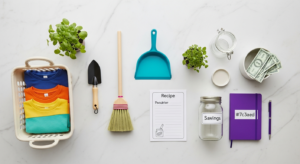
- Laundry Helpers: Young children can sort clothes by color, put clean clothes in drawers, or even help fold simple items like washcloths. Older kids can learn to load the washing machine and dryer, teaching sequences and responsibility.
- Tidying & Organizing: Make cleaning up toys a regular part of the routine. Use labeled bins or baskets to make it easy. Introduce tasks like wiping surfaces, sweeping small areas, or watering plants. These activities refine fine motor skills and foster a sense of order.
- Pet Care: If you have pets, involve children in feeding, watering, or helping with grooming (under supervision). This teaches empathy, responsibility, and consistent care.
DIY & Home Improvement: Learning by Doing
- Simple Mending: Teach older children how to sew a button, repair a small tear, or hem a piece of fabric. This develops fine motor skills and introduces valuable life skills.
- Toolbox Exploration: Under strict supervision, introduce basic tools like a screwdriver or hammer with a soft piece of wood. This can be fascinating for children and teaches safety and practical application.
Expert Tip: Frame these activities as “helping the family” rather than “chores.” Offer choices (“Would you like to help with laundry or setting the table?”) to give children a sense of control. Break tasks into small, manageable steps and model how to do them. Positive encouragement goes a long way in fostering a helpful spirit.
Wonders of the World: Sensory & Imaginative Play
Sensory play engages a child’s five senses and is fundamental for brain development. It helps children learn about the world around them, process information, and develop cognitive skills. Imaginative play, on the other hand, is the cornerstone of creativity, social-emotional learning, and language development. It allows children to explore roles, solve problems, and express emotions in a safe, playful environment. Experts often highlight that unstructured, imaginative play is critical for developing executive function skills.
Sensory Explorations: Engaging All the Senses
- Sensory Bins: Fill a bin with dried rice, pasta, beans, water beads, or sand. Add small scoops, cups, funnels, and tiny toys for endless exploration. This enhances fine motor skills, mathematical concepts (volume, capacity), and provides calming sensory input.
- Water Table Fun: A simple basin of water with dish soap, sponges, small plastic animals, and cups can offer hours of play. Children can pour, splash, and wash, engaging multiple senses.
- Smell Jars: Fill small, opaque containers with cotton balls soaked in different scents (vanilla extract, cinnamon, lemon juice, coffee grounds). Have children guess the smells. This hones their sense of smell and vocabulary.
- Sound Bottles: Fill clear plastic bottles with different materials (rice, beans, pasta, water, bells) and seal them. Children can shake them to explore different sounds and volumes.
Imaginative & Pretend Play: Building Worlds
- Dress-Up Box: Fill a box with old clothes, scarves, hats, and accessories. Encourage children to dress up as characters, animals, or professionals. This fosters role-playing, empathy, and storytelling.
- Puppet Show Theatre: Use socks or paper bags to create simple puppets. A doorway or a large cardboard box can become a stage. Encourage children to create stories and perform for the family, enhancing language and narrative skills.
- Fort Building: Provide blankets, pillows, chairs, and clothespins and let children build their own forts. This encourages spatial reasoning, cooperation (if building with others), and creates a special, imaginative hideaway.
- Role-Playing Scenarios: Set up a pretend grocery store, doctor’s office, restaurant, or animal hospital using household items. This helps children process real-world experiences, practice social interactions, and develop problem-solving skills.
Expert Tip: Provide open-ended materials that can be used in multiple ways. Allow children ample unstructured time for sensory and imaginative play. Observe their play to understand their interests and gently extend their ideas with questions or new props, rather than directing the play.
Connecting with Nature: Backyard & Balcony Explorations
Even if you don’t have vast green spaces, your backyard, a small balcony, or even a window can offer incredible opportunities for children to connect with nature. Research consistently shows that time spent in nature reduces stress, improves concentration, and fosters a sense of wonder and curiosity. It’s essential for both physical and mental well-being.
Micro-Explorations: Discovering the Small Wonders
- Nature Scavenger Hunt: Create a list of natural items to find: a smooth rock, a bumpy leaf, something that smells good, a feather, a tiny stick. Provide a magnifying glass for closer inspection. This sharpens observation skills and appreciation for biodiversity.
- Insect Safari: With a magnifying glass and a safe clear container, encourage children to observe insects in your garden or on a balcony. Discuss their features and behaviors. Emphasize gentle observation and releasing them afterwards.
- Rock Painting: Collect smooth rocks, wash them, and use acrylic paints to decorate them. They can become garden markers, story stones, or simply beautiful art to leave around the neighborhood for others to find (kindness rocks).
- Cloud Gazing & Storytelling: Lie down outside or look out a window and watch the clouds. Ask children what shapes they see and create stories about the cloud characters. This encourages imaginative thinking and observation.
Gardening & Growing: Nurturing Life
- Seed Planting Project: Plant seeds (flowers, herbs, or easy-to-grow vegetables like radishes) in pots or a small garden bed. Children can help water and observe the growth daily. This teaches patience, life cycles, and responsibility.
- Balcony Herb Garden: If you have a balcony, dedicate a few pots to herbs. Children can help plant, water, and eventually harvest them for cooking. This introduces them to plant care and healthy eating.
Outdoor Art & Play: Nature as Canvas
- Mud Kitchen: If you have a patch of dirt, create a “mud kitchen” with old pots, pans, and utensils. Children can mix mud, leaves, and water to create “potions” and “meals,” engaging in rich sensory and imaginative play.
- Nature Mandalas: Gather natural items like pebbles, leaves, flowers, and twigs. Arrange them in circular patterns on the ground. This is a calming, creative activity that connects children to natural forms.
Expert Tip: Encourage free, unstructured play in nature. Provide tools like a magnifying glass, binoculars, or a small journal to document observations. Foster a sense of respect and wonder for the natural world by modeling it yourself.
Conclusion: Cultivating Joy and Connection at Home
Creating an enriching environment for our children at home is not about achieving perfection, but about fostering a mindset of curiosity, connection, and joy. We hope this Veralyn Media guide has provided you with a treasure trove of ideas, empowering you to see your home as a dynamic space where learning and laughter coexist beautifully. Remember, the most valuable “activity” you can offer your child is your presence, your encouragement, and the safe space to explore, create, and simply be themselves.
Every spilled paint drop, every wobbly block tower, every imaginative story whispered in a fort – these are not just moments of play; they are building blocks for resilience, creativity, and a deep sense of belonging. As you navigate the wonderful journey of parenthood, be kind to yourself. You are doing an incredible job. Embrace the messes, celebrate the small victories, and cherish the precious memories you are making together, right here at home.