Reclaim Your Sanctuary: A Comprehensive Guide to Organizing Your Home from Scratch for Enhanced Well-Being

Dear reader, have you ever walked into a room in your home and felt a subtle, or perhaps not-so-subtle, wave of overwhelm? That pile of mail multiplying on the counter, the overflowing closet, the toys perpetually scattered – it’s a scene many of us know intimately. In our fast-paced lives, our homes are meant to be havens, but often, they become silent accumulators of our busy-ness. The thought of tackling a deeply disorganized space can feel like climbing a mountain, especially when you’re starting from scratch. But what if we told you that organizing your home isn’t just about tidiness; it’s a profound act of self-care, a powerful step towards greater peace, clarity, and overall well-being? At Veralyn Media, we believe that a well-ordered environment can significantly contribute to a well-ordered life. This comprehensive guide is designed to empower you, step by step, to transform your living space from a source of stress into a sanctuary, building a foundation of order that supports your health, happiness, and daily flow. We’ll explore not just the “how-to,” but the crucial “why,” grounding our advice in practical, evidence-based strategies that respect your energy, your time, and your emotional connection to your home.

The Deep Breath Before the Dive: Why Organizing is Self-Care

Before we even think about a single drawer or closet, let’s acknowledge the profound connection between our physical environment and our mental and emotional health. It’s not just an aesthetic preference; research consistently highlights the psychological toll of clutter. Studies, such as those published in the Journal of Environmental Psychology, indicate that cluttered environments can increase stress levels, impair focus, and even contribute to feelings of anxiety and depression. When our spaces are chaotic, our minds often mirror that chaos.

Think about the mental load of a disorganized home. Every time you see a pile of things, your brain processes it as an unfinished task, a decision waiting to be made. This constant, low-grade cognitive burden, often referred to as “decision fatigue,” saps your energy and makes it harder to focus on what truly matters. Searching for lost keys, tripping over shoes, or feeling embarrassed to invite friends over are not just minor inconveniences; they chip away at your sense of peace and control. For women, who often bear the brunt of household management, this can exacerbate feelings of overwhelm and burnout.

Conversely, an organized home is a powerful ally for your well-being. It creates a sense of calm and predictability, reducing the visual and mental noise that can hijack your attention. When things have a designated place, decision-making is streamlined, freeing up mental energy for creativity, relaxation, or pursuing your passions. Imagine walking into a serene bedroom designed for rest, or a functional kitchen that makes healthy meal prep a joy. This isn’t just about appearances; it’s about creating an environment that actively supports your physical health (less dust, easier cleaning), mental clarity, emotional stability, and spiritual calm. Organizing, therefore, isn’t a chore to dread; it’s a proactive act of self-care, an investment in your personal sanctuary and overall quality of life.

Cultivating Your Organizing Mindset: Preparing for Transformation

Embarking on a home organization journey, especially from scratch, requires more than just a desire for tidiness; it demands a shift in mindset. This isn’t a sprint; it’s a marathon, and equipping yourself with the right mental tools will be your greatest asset. Here’s how to cultivate a mindset that fosters sustainable change:

1. Define Your “Why” and Envision Your Sanctuary

🌿 Health Tip

Before lifting a finger, take time to visualize your desired outcome. What does an organized home look, feel, and sound like to you? How will it impact your daily life, your relationships, your well-being? Perhaps it means having a clear workspace to pursue a hobby, a serene bedroom for better sleep, or a functional kitchen that encourages healthy cooking. Write down your “why” – your core motivations. When the process gets tough, reminding yourself of this vision will be your powerful fuel. This isn’t just dreaming; psychologists emphasize that clear visualization can activate the brain’s problem-solving mechanisms and boost motivation.

2. Start Small, Think Big: Embrace Micro-Organizing

The biggest mistake people make when organizing from scratch is trying to do too much, too soon, leading to burnout and abandonment. The key is to break down the monumental task into manageable, bite-sized steps. Instead of “organize the house,” think “organize one kitchen drawer,” or “clear off one shelf.” Dedicate just 15-30 minutes a day, or an hour a few times a week, to a specific, small area. This approach, often called “micro-organizing,” builds momentum and celebrates small victories, making the entire process feel less daunting. Research on habit formation consistently shows that small, consistent actions are far more effective than infrequent, overwhelming efforts.

3. Be Kind to Yourself: Acknowledge Emotions

Organizing often stirs up emotions – nostalgia, guilt, sentimentality, or even frustration. It’s okay to feel these things. Approach each item with compassion, recognizing that it once served a purpose or held meaning. Don’t judge yourself for past purchasing decisions or for accumulating items. This journey is about progress, not perfection. If you feel overwhelmed, take a break. Hydrate, stretch, step outside. Self-compassion is crucial for sustaining motivation and preventing burnout.

4. Plan and Prepare: Gather Your Tools

While you don’t need to buy a ton of organizing supplies upfront (in fact, declutter first!), having a few essentials ready can make the process smoother. Think: trash bags, recycling bins, donation boxes, cleaning supplies, and perhaps some basic labels or temporary containers. Having these on hand means you won’t interrupt your flow to search for them. Additionally, schedule your organizing sessions like you would any other important appointment, and protect that time.

5. Manage Expectations: It’s a Journey, Not a Destination

Your home didn’t become disorganized overnight, and it won’t become perfectly orderly in a day. There will be moments of progress and moments where things feel messier before they get better. Embrace the process. Focus on consistent effort rather than immediate perfection. The goal isn’t just to “get organized,” but to develop systems and habits that support a continuously functional and peaceful home. This long-term perspective is vital for sustainable success.

The Art of Letting Go: Decluttering with Purpose and Compassion

This is arguably the most critical and often the most challenging phase of organizing from scratch. Before you can organize anything, you must first decide what stays and what goes. Approaching decluttering with purpose means being intentional about what you allow to occupy your precious space, and doing so with compassion for yourself and your belongings.

1. The “One Space at a Time” Rule

Resist the urge to pull everything out of every closet and drawer simultaneously. This almost guarantees overwhelm. Instead, choose ONE small, manageable area to start with – a single drawer, a shelf, or a small section of a counter. This allows you to see progress quickly and avoids creating a bigger mess than you started with. As you gain confidence, you can tackle larger zones.

2. The Four-Box Method (or Five)

As you go through items in your chosen space, designate four (or five) categories. It helps to have physical boxes or bags labeled clearly:

  • Keep: Items you love, use regularly, or that serve a clear purpose and genuinely add value to your life.
  • Donate/Sell: Items that are in good condition but no longer serve you. Think about giving them a new life with someone else.
  • Trash/Recycle: Broken items, expired products, true garbage, or things that cannot be donated.
  • Relocate: Items that belong in another room or a different part of the house. Don’t put them back in the current space!
  • Sentimental (Optional): If you struggle with sentimental items, create a separate box for them. We’ll address these in a moment.

3. Ask the Hard Questions: Decision-Making Frameworks

When holding an item, ask yourself these guiding questions. Be honest, but not harsh:

  • “Does this item serve a practical purpose in my life RIGHT NOW?”
  • “Do I genuinely love this item, or does it bring me joy?”
  • “Have I used this in the last 6-12 months? (Adjust for seasonal items).”
  • “Do I have multiples of this item? Which is the best one?”
  • “Am I holding onto this out of guilt, obligation, or a ‘what if’ scenario that’s unlikely?”
  • “If I saw this in a store today, would I buy it again?”

Remember, the goal isn’t minimalism if that’s not your style, but rather intentional living – surrounding yourself only with what genuinely supports your desired lifestyle.

4. Dealing with the “What Ifs” and Sentimental Items

  • The “What Ifs”: For items you might “someday” need, consider if you could easily borrow, rent, or repurchase it if that rare occasion arises. Often, the mental burden of keeping it outweighs the unlikely future benefit.
  • Sentimental Items: These are often the hardest. Instead of trying to declutter them during your main session, put them aside in a designated “sentimental” box. Come back to this box when you’re feeling fresh and strong. When you do, challenge yourself to keep only a curated collection. Can you take a photo of an item instead of keeping the physical object? Can you consolidate memories (e.g., one box for all childhood mementos)? The memory is often more important than the object itself.

5. The Immediate Action Rule

Once you’ve sorted a space, immediately take action on your boxes. Put the “relocate” items in their proper places, take the “trash” out, and put “donate/sell” items in your car or by the front door to leave as soon as possible. Delaying this step often leads to “piles of shame” that undermine your hard work. The sooner these items leave your home, the sooner you’ll feel the mental and physical lightness.

This decluttering phase is about making conscious choices about what you invite into your life and your home. It’s an empowering process that lays the groundwork for true organization.

Building Your Sanctuary: Strategic Systems for Every Space

Once you’ve decluttered, you’re left with the items you truly love, need, and use. Now comes the exciting part: creating functional, intuitive systems to house them. This is where your home transforms from merely a collection of items into a supportive sanctuary. The goal isn’t to buy endless containers, but to create “homes” for everything you own, making items easy to find, use, and put away.

1. Zone Planning: Divide and Conquer

Look at each room and identify its primary functions and the activities that happen there. For example, a kitchen isn’t just for cooking; it might have zones for food prep, cooking, baking, dining, and even a “command center” for mail or school notices. A bedroom might have zones for sleeping, dressing, reading, and self-care. Assign items to their logical zones. This ensures that everything you need for a particular activity is conveniently located together.

2. The “Home for Everything” Principle

Every single item you own needs a designated “home.” If an item doesn’t have a specific spot, it will inevitably end up on a counter, floor, or in a “junk drawer.” As you put things away, consciously ask yourself, “Where does this live?” If you can’t answer, create a home for it. This might involve:

  • Proximity: Store items where they are used. Cooking utensils near the stove, toiletries near the sink, office supplies near your desk.
  • Accessibility: Frequently used items should be easiest to access (eye-level shelves, front of drawers). Less frequently used items can go higher, lower, or in less prime real estate.
  • Visibility: “Out of sight, out of mind” can lead to forgotten items. Clear bins or open shelving (if aesthetically pleasing) can help you see what you have.

3. Maximize Your Space: Think Vertically and Clearly

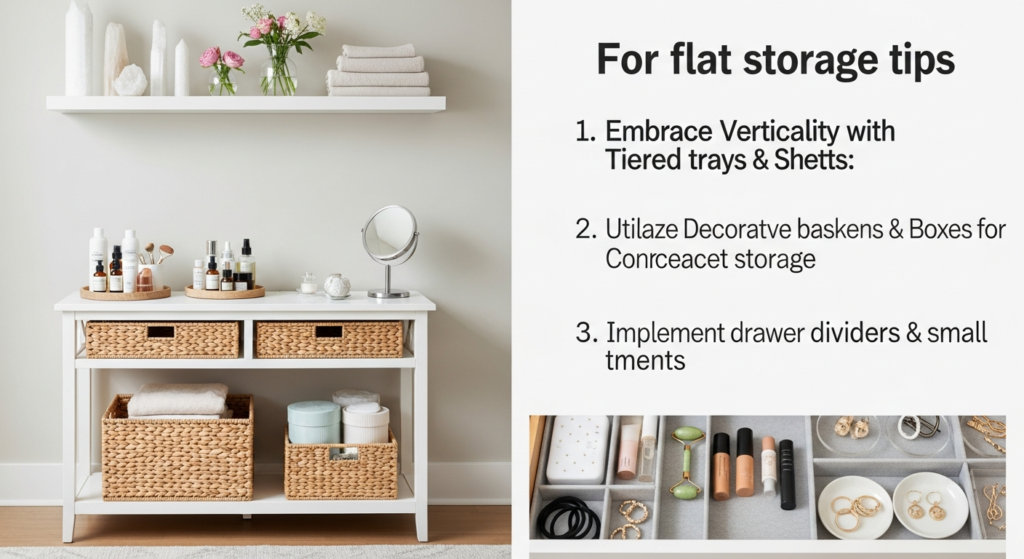
  • Go Vertical: Walls, backs of doors, and the height within cabinets and closets are often underutilized. Consider vertical shelving units, over-the-door organizers, stackable drawers, or risers within cupboards. This is especially useful in small spaces.
  • Clear Containers and Dividers: Once you know what you’re keeping, invest in smart storage solutions. Clear containers are fantastic because you can see what’s inside without opening them, reducing visual clutter in your mind. Drawer dividers, shelf organizers, and small bins can corral similar items and prevent them from migrating.
  • Labels are Your Best Friend: Especially for opaque containers, bins in closets, or file folders, labels are essential. They eliminate guesswork, help family members put things back correctly, and reinforce your new systems. They’re also great for inventory (e.g., “winter clothes,” “camping gear”).

4. Kitchen & Pantry: Function Over Form

  • Group Like Items: All baking supplies together, all spices together, all breakfast foods.
  • “First In, First Out”: Especially for pantry items, arrange so older items are used first.
  • Decanting: Consider decanting dry goods (flour, sugar, pasta) into airtight, uniform containers. This looks visually appealing, saves space, and keeps food fresher.
  • Drawer Organizers: Utensil trays, knife blocks, and spice rack inserts are game-changers.

5. Closet & Dresser: A Wardrobe That Works

  • The Capsule Wardrobe Concept: Even if you don’t fully embrace a capsule wardrobe, the principle of having a cohesive collection of versatile items can streamline your closet.
  • Consistent Hangers: Using slim, matching hangers instantly elevates the look of your closet and can free up significant space.
  • Fold, Don’t Pile: For items like t-shirts, sweaters, and jeans, folding vertically (e.g., KonMari style) in drawers or on shelves saves space and makes every item visible.
  • Drawer Dividers: For socks, underwear, and accessories.

6. Paper & Digital Clutter: The Often-Forgotten Frontier

  • “Act On It, File It, Shred It”: This simple mantra can revolutionize your paper management. Handle mail immediately. Create a simple filing system (physical or digital) for important documents. Shred anything with personal information that you don’t need.
  • Go Digital: Scan important documents, sign up for paperless billing, and unsubscribe from unwanted junk mail.
  • Digital File Management: Organize your computer files and photos into logical folders. Delete duplicates and old, unnecessary files.

Remember, these systems are meant to serve you, not the other way around. Be flexible and adjust as you discover what truly works for your lifestyle and your family.

The Rhythm of Order: Sustaining Your Organized Home

Congratulations! You’ve decluttered, you’ve created systems, and your home is beginning to feel like the sanctuary you envisioned. But the journey doesn’t end here. The true secret to a perpetually organized home lies in establishing consistent habits and routines – creating a “rhythm of order.” Without maintenance, even the most meticulously organized spaces can revert to chaos. This phase is about developing practices that keep your home functioning smoothly, minimizing the need for another major overhaul.

1. The “Daily Reset”: 10-15 Minutes of Magic

This is perhaps the most powerful habit you can cultivate. Dedicate 10-15 minutes each evening (or morning) to a quick tidy-up before moving on to the next activity or going to bed. This isn’t deep cleaning; it’s putting things back where they belong:

  • Fluff pillows, fold throws.
  • Wipe down kitchen counters.
  • Put dishes in the dishwasher.
  • Gather misplaced items and return them to their “homes.”
  • Clear off your bedside table or desk.

This small, consistent effort prevents clutter from accumulating and makes a huge difference in how you start and end your day. Psychologists and productivity experts often highlight the compounding effect of small, consistent actions – they build up to significant results over time.

2. The “One In, One Out” Rule

To prevent new clutter from accumulating, adopt the “one in, one out” rule, especially for categories prone to overgrowth like clothes, books, and kitchen gadgets. When you bring something new into your home, commit to letting go of a similar item. For example, buy a new shirt? Donate an old one. This mindful approach helps you maintain your curated collection and keeps your space from becoming overwhelmed again.

3. Weekly Wrangle: The Quick Catch-Up

In addition to your daily reset, dedicate 30-60 minutes once a week to a slightly deeper tidy-up. This could involve:
  • Reviewing your “relocate” pile from the week.
  • Quickly sorting mail and papers.
  • Wiping down frequently used surfaces.
  • Restocking essentials (toilet paper, cleaning supplies).
  • A quick sweep or vacuum of high-traffic areas.

This weekly check-in prevents small issues from snowballing into larger problems, ensuring your systems remain functional.

4. Seasonal Decluttering Check-ins

Twice a year (e.g., spring and fall), schedule a more focused decluttering session for specific categories. This is an excellent time to:

  • Go through seasonal clothing.
  • Review children’s toys and books.
  • Check expiration dates in the pantry and medicine cabinet.
  • Assess items in storage (attic, garage).

These check-ins are less intense than your initial “from scratch” purge, as you’re primarily maintaining, not creating, systems.

5. Involve the Whole Family (Age-Appropriately)

An organized home is a team effort. Even young children can learn to put away their toys, and older children and partners can be assigned specific tidying tasks. Clearly communicate expectations and the “home” for various items. When everyone contributes, the burden is shared, and the benefits of a peaceful home are enjoyed by all. Frame it as contributing to a shared sanctuary, not just a chore list.

6. Be Flexible and Forgiving

Life happens! There will be weeks when the daily reset doesn’t happen, or the weekly wangle gets skipped. Don’t let a missed day turn into a missed month. Forgive yourself, acknowledge the lapse, and simply get back on track. The goal isn’t perfection, but consistent progress and a resilient system that can recover from minor disruptions. Embrace an attitude of continuous improvement rather than striving for an unattainable ideal.

By integrating these practices into your routine, you’re not just maintaining an organized home; you’re cultivating a lifestyle that prioritizes order, calm, and efficiency. This rhythm of order becomes a gentle, supportive backdrop to your life, allowing you to focus your energy on what truly nourishes your soul.

Your Journey to a Harmonious Home Awaits

Embarking on the journey to organize your home from scratch is a significant undertaking, but it is one of the most rewarding investments you can make in your own well-being. It’s not simply about having a tidy house; it’s about reclaiming your space, your time, and your peace of mind. By approaching this process with intention, self-compassion, and a commitment to sustainable habits, you are not just tidying up your home; you are actively nurturing your mental, emotional, and even physical health.

Remember, this is your unique journey. There’s no single “right” way to organize, only the way that works best for you and your family. Start small, celebrate every victory, and be patient with yourself. The transformation of your physical space will inevitably lead to a deeper sense of calm, clarity, and control in your life. At Veralyn Media, we champion these acts of self-care and empowerment. We believe you have the strength and wisdom to create the harmonious sanctuary you deserve. Take that first deep breath, choose your first small drawer, and begin to build the organized life that supports your most vibrant self. You’ve got this.

“`json
{
“@context”: “https://schema.org”,
“@graph”: [
{
“@type”: “Article”,
“mainEntityOfPage”: {
“@type”: “WebPage”,
“@id”: “https://www.veralynmedia.com/reclaim-your-sanctuary-organize-home-from-scratch”
},
“headline”: “Reclaim Your Sanctuary: A Comprehensive Guide to Organizing Your Home from Scratch for Enhanced Well-Being”,
“image”: [
“https://www.veralynmedia.com/images/home-organization-hero.jpg”,
“https://www.veralynmedia.com/images/declutter-mindset.jpg”,
“https://www.veralynmedia.com/images/organized-space-systems.jpg”
],
“datePublished”: “2023-10-26T09:00:00+08:00”,
“dateModified”: “2023-10-26T10:30:00+08:00”,
“author”: {
“@type”: “Person”,
“name”: “Veralyn Media Editorial Team”
},
“publisher”: {
“@type”: “Organization”,
“name”: “Veralyn Media”,
“logo”: {
“@type”: “ImageObject”,
“url”: “https://www.veralynmedia.com/logo.png”
}
},
“description”: “Feeling overwhelmed by clutter? Learn how to organize your home from scratch with this comprehensive, evidence-based guide from Veralyn Media. Discover actionable tips to declutter, create functional systems, and maintain a serene, stress-free living space that supports your well-being. Transform your home into a sanctuary, one mindful step at a time.”,
“articleSection”: [
“Home & Family”,
“Wellness”,
“Organization”
],
“keywords”: “organize home from scratch, decluttering, home organization, stress reduction, well-being, functional home, self-care, organizing tips, home systems, maintenance habits”,
“articleBody”: “Dear reader, have you ever walked into a room in your home and felt a subtle, or perhaps not-so-subtle, wave of overwhelm? That pile of mail multiplying on the counter, the overflowing closet, the toys perpetually scattered – it’s a scene many of us know intimately… (full article content goes here, truncated for schema example)”
},
{
“@type”: “FAQPage”,
“mainEntity”: [
{
“@type”: “Question”,
“name”: “I feel completely overwhelmed and don’t know where to start. What’s the absolute first step?”,
“acceptedAnswer”: {
“@type”: “Answer”,
“text”: “The absolute first step is to pick ONE small, visible area that truly bothers you but is manageable. This could be your bedside table, a single kitchen counter, or even just clearing off the floor around your bed. Set a timer for 15 minutes. Focus only on that small area, making quick decisions. Seeing immediate progress in a small space will give you the psychological boost and momentum to tackle the next small area. Remember, consistency over intensity.”
}
},
{
“@type”: “Question”,
“name”: “How do I deal with a partner or family members who aren